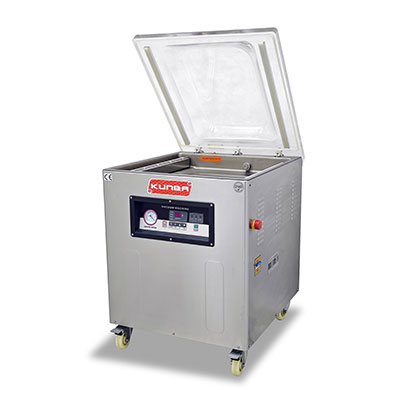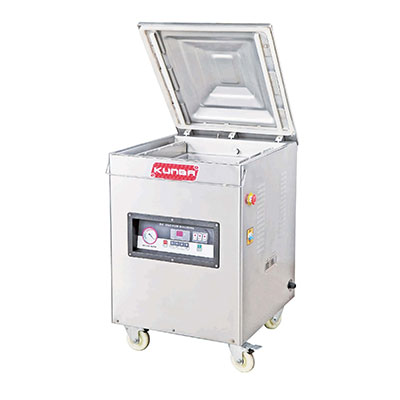
Freshly roasted coffee releases an enticing aroma, but that vibrant freshness typically lasts only one to two weeks. For coffee roasters, the biggest challenge is not roasting itself but locking in peak flavor and delivering it intact to customers. Oxygen, moisture, light—especially oxygen—is the number one enemy of fresh coffee.
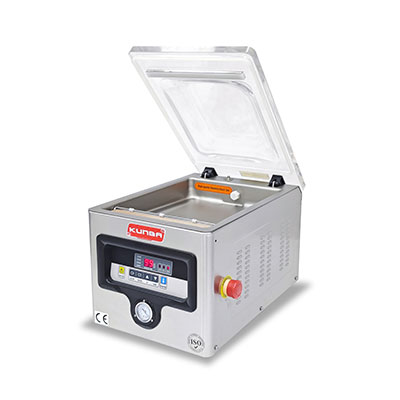
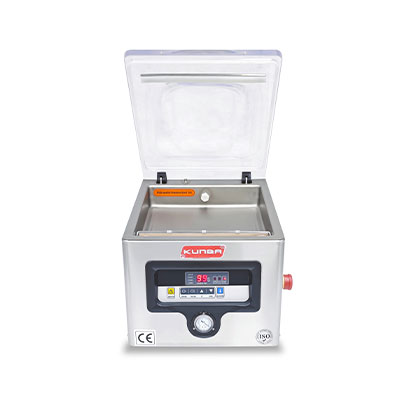
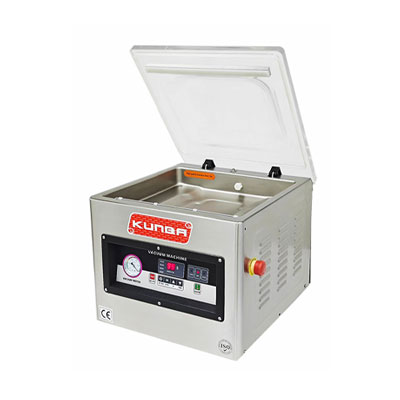
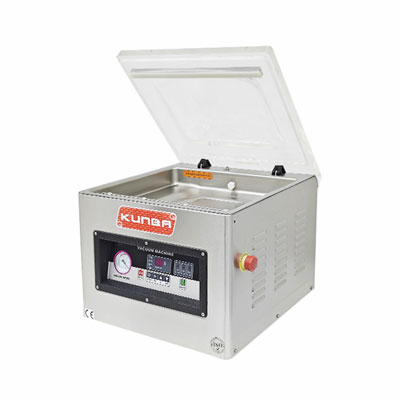
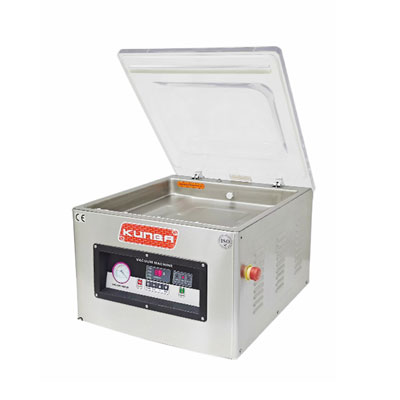
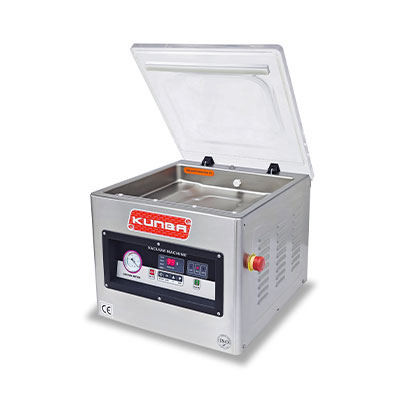
In this guide, we explore how a commercial vacuum packaging machine for coffee roasters becomes an essential piece of equipment in the specialty coffee supply chain. You will learn the science behind vacuum packing, how to deal with the unique degassing challenge of coffee beans, and how to choose the right machine settings and consumables to keep every bag tasting freshly roasted for months.
Coffee staleness is essentially an oxidation process. Roasted coffee beans contain over 800 volatile aromatic compounds—esters, aldehydes, ketones—that create the complex flavor profile of coffee. Once these compounds contact atmospheric oxygen, multiple chemical reactions accelerate rapidly:
Oil oxidation – Natural oils on the bean surface combine with oxygen, producing rancid, cardboard-like odors. Bright fruit acids turn dull and sour.
Aroma loss – Oxidation speeds up the escape of volatile aromatics—the dry fragrance of ground coffee shifts from floral and fruity to flat and grainy.
CO₂ loss – Carbon dioxide not only affects bloom during brewing but also acts as a carrier for aromatic compounds; as CO₂ escapes, flavors go with it.
By vacuum packaging, air is removed from the chamber, and oxygen concentration can be reduced to below 1%. At 99% oxygen removal, oxidation rates drop exponentially. Data shows that at room temperature, coffee stored in ordinary paper or one‑way valve bags maintains peak flavor for about 2–4 weeks. With high‑vacuum sealing, cupping scores remain stable for more than six months. For roasters focused on quality, this means cross‑region sales, e‑commerce logistics, and inventory turnover no longer have to sacrifice freshness.
If you simply vacuum-pack fresh coffee, you will quickly face a problem: bags that looked perfectly sealed become bloated like balloons the next day, or even burst. This is not a machine failure—it is the natural degassing of the coffee beans.
During roasting, large amounts of carbon dioxide (CO₂) build up inside each bean. After roasting, CO₂ slowly releases, a process called degassing, which typically lasts 5 to 14 days, peaking 24–48 hours post‑roast. If you put freshly roasted beans into a standard vacuum bag, the ongoing CO₂ production has nowhere to go, and pressure will inevitably cause bag swelling.
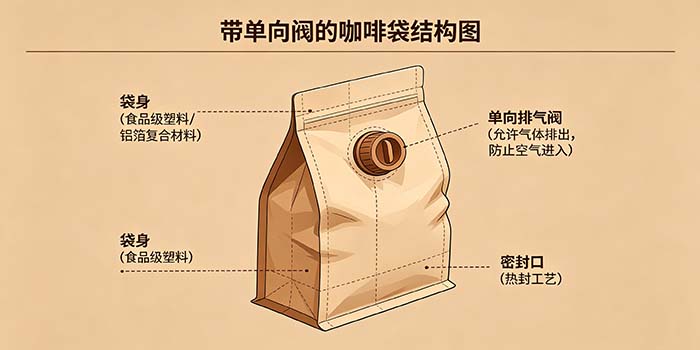
The solution is a coffee degassing valve vacuum bag—a vacuum bag with a one‑way degassing valve. The valve’s core is a thin silicone membrane:
Gas out – When internal pressure (from CO₂) exceeds outside atmospheric pressure, the valve opens, and gas flows out.
Oxygen blocked – When closed, outside air cannot enter through the valve, keeping the internal low‑oxygen environment even on the shelf or inside a shipping box.
Correct workflow: Use a commercial vacuum packaging machine for coffee roasters to vacuum‑seal the one‑way valve bag → oxygen is removed → over the next days, CO₂ escapes automatically through the valve → the bag stays tight and flat (not swollen). This design perfectly balances ongoing degassing with long‑term preservation and has become the industry standard for specialty coffee.
Many roaster owners ask: since oxygen is so harmful, is a higher vacuum always better? The answer is “it depends.” Whole beans and ground coffee have fundamentally different tolerances to vacuum pressure. Wrong settings not only reduce packing efficiency but can also harm product quality.
| Form | Recommended Vacuum Level | Why |
|---|---|---|
| Whole bean | 98% – 99% | Intact bean structure is strong enough to handle high vacuum without deformation; extremely low residual oxygen gives maximum shelf life. |
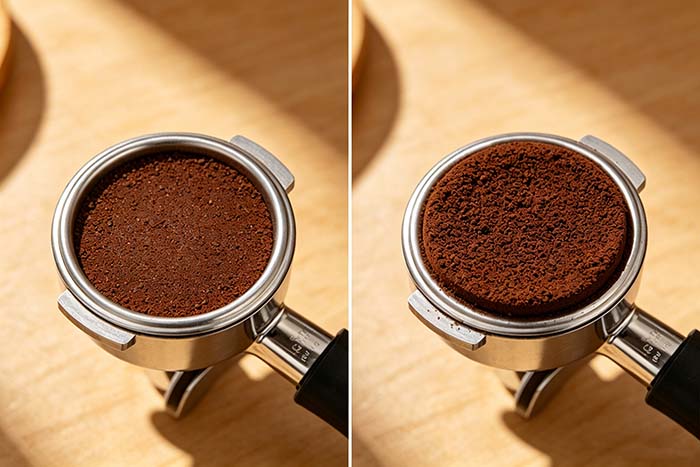
| Fine ground | 85% – 90% | Excessive vacuum compacts the powder into hard bricks, ruining even extraction. Also, fine particles can be sucked into the vacuum pump. |
Special technique – Two‑stage vacuum:
First stage: vacuum to –0.6 bar, pause 2–3 seconds. This allows powder to settle without dust blow‑off.
Second stage: continue vacuum to –0.8 bar, maintaining slight gaps between particles so that hot water can penetrate evenly during brewing.
Not all vacuum packaging machines are suitable for coffee. When choosing a commercial vacuum packaging machine for coffee roasters, focus on these four essential features. They directly determine packaging results and equipment lifespan.
Coffee packaging requires flexible settings. The machine should have a digital panel or dial that allows step‑wise adjustment. Fixed‑vacuum entry‑level machines are not suitable for professional coffee use.
Fine coffee grounds, especially espresso‑fine particles, can easily be carried by airflow into the vacuum pump. Once powder enters the pump’s valve plates or pistons, it causes seal failure, loss of vacuum performance, and even pump seizure. Always choose a machine with a removable, high‑efficiency filter installed at the pump inlet. Check and clean or replace the filter media after every 200–300 kg of ground coffee packaged.
Soft‑start means the vacuum pump begins slowly and gradually increases suction power instead of going to full power instantly. This effectively prevents powder from “fountaining” inside the bag, keeping particles away from the degassing valve and sealing area. For roasters that handle both whole bean and ground coffee, soft‑start mode is a practical feature for consistent results.
For ultra‑premium coffee, even lower residual oxygen can further improve stability. Nitrogen flush coffee packaging works like this: after vacuum but before sealing, food‑grade nitrogen (N₂) is flushed into the bag. Because nitrogen is inert, it displaces any remaining oxygen, lowering oxygen concentration to below 0.5%. This cycle is often repeated 1–2 times. Gas flush is typically found on mid-to-high-end chamber vacuum sealers and requires an external nitrogen supply.
The material and construction of the vacuum bag are just as important. Coffee beans have sharp edges, and oils can penetrate ordinary single‑layer PE bags, leading to micro‑punctures or oil seepage at seals. A three‑layer co‑extruded bag is recommended. Common structures include:
PET/AL/PE – The aluminum layer provides an excellent oxygen and light barrier, ideal for long storage or premium retail packaging.
PET/EVOH/PE – EVOH is a transparent high‑barrier material with an oxygen barrier close to that of aluminum foil, but transparent so customers can see the beans.
Key specifications :
Thickness: 80 – 100 microns. Below 80 microns, bags are easily punctured by bean edges. Above 100 microns, flexibility decreases, reducing the vacuum cling effect.
Valve placement: Ensure the one‑way valve is completely outside the seal area. If the machine’s sealing bar presses on the valve, it will either seal the valve shut or damage the heating element.
Below is the standard procedure for whole beans using a typical commercial chamber vacuum sealer.
Step 1: Let roasted coffee cool completely to room temperature
Freshly roasted beans can be above 180°C internally. Even if the surface feels cool after 10 minutes, the core may still be hot. If you package while warm, hot residual air inside the bag will condense into water droplets as it cools, causing the beans to absorb moisture and accelerating oil rancidity. Cool to below 25°C before packaging.
Step 2: Load beans into a one‑way valve bag
Put the desired weight (e.g., 1 kg or 5 lb) into the bag. Keep the valve area flat and oriented toward the bag opening. Do not cover the outside of the valve with stickers.
Step 3: Set machine parameters
Vacuum level: 95% (recommended for whole beans – good balance of preservation and speed)
Seal time: 1.8 seconds (depends on seal bar width and bag thickness; 80‑100 micron bags typically need 1.5‑2.0 seconds)
Cool time: 2 seconds (lets the seal bar cool to prevent sticking)
Step 4: Place the bag opening flat into the seal area
Make sure there are no wrinkles, moisture, or coffee residues. Ideally, position the valve outside the seal bar (toward the outer side of the chamber).
Step 5: Start the cycle and check seal integrity
After the cycle finishes, remove the bag. Visually inspect the seal line for gaps or incomplete sealing. Gently press the center of the valve – you should feel a slight gap. Finally, leave the bag to rest for 30 minutes and check for any slow re‑inflation that would indicate a leak.
Q1: Can I vacuum-pack coffee immediately after roasting?
It is not recommended. The best practice is to wait 6–12 hours (or even 24 hours) after roasting before vacuum packing. This allows the most intense initial degassing to occur first, avoiding excessive internal pressure that could overwhelm the valve. If you must package immediately, use a bag with a larger valve and lower the vacuum setting to about 90%.
Q2: Does vacuum packing stop degassing?
No, it does not. Vacuum packing only removes the original air inside the bag. The coffee beans themselves will continue to release CO₂. That is precisely why you need to use a one‑way degassing valve. Vacuum does not change the bean structure or suppress degassing.
Q3: What size chamber is needed for 5lb coffee bags?
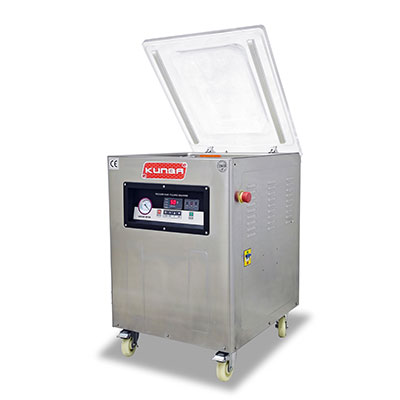
A 5 lb coffee bag typically measures about 25 cm x 35 cm. For such bags, the chamber of a vacuum sealer should be at least 40 cm in internal length, 35 cm in width, and deep enough to accommodate the filled bag thickness. Look for a chamber depth of at least 12 cm. A model like the KUNBA DZ-400 handles 2‑5 lb bags easily. For larger commercial bags, consider a double seal bar or extended chamber model.
From the roastery to the customer’s cup, preserving freshness is a race against time. A commercial vacuum packaging machine for coffee roasters is not just packing equipment—it is the core of your quality assurance system. By using a coffee degassing valve vacuum bag to solve the degassing problem, together with adjustable vacuum level, powder filter, and soft‑start mode, your coffee can travel across distances and time while delivering the peak flavor of roast day.
For specialty roasters aiming even higher, nitrogen flush capability pushes preservation to the extreme. Whether you are a small craft roastery producing tens of kilograms per day or a larger commercial facility, choosing the right vacuum sealer for coffee beans will build a quality reputation that sets your brand apart.
KUNBA offers dedicated coffee‑grade vacuum packaging machines with gas flush and powder filter systems, ranging from single‑chamber tabletop models to dual‑chamber fully automated lines. Contact our coffee packaging consultant for a free sample test and parameter configuration advice.
Note: The images in this article are for reference only.

GET A QUOTE

 中文
中文 English
 Français
 Español
 Português