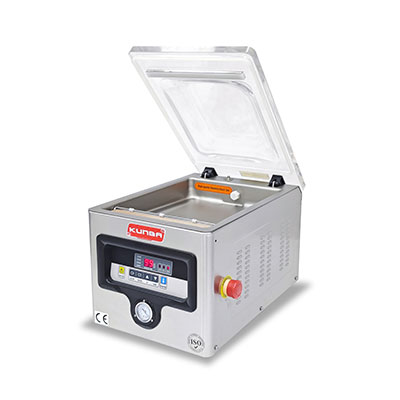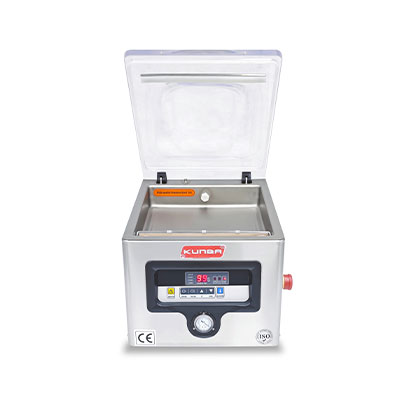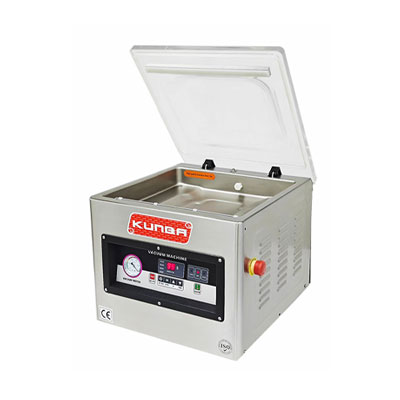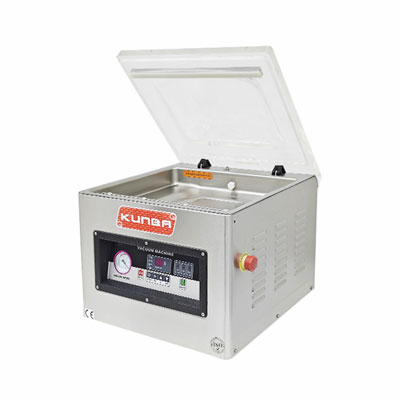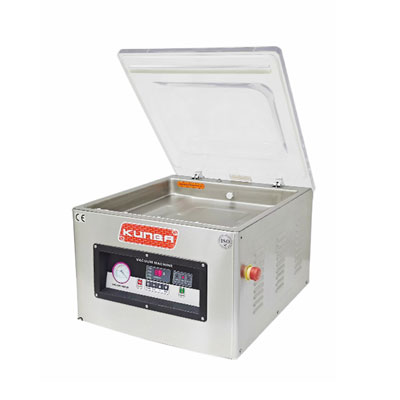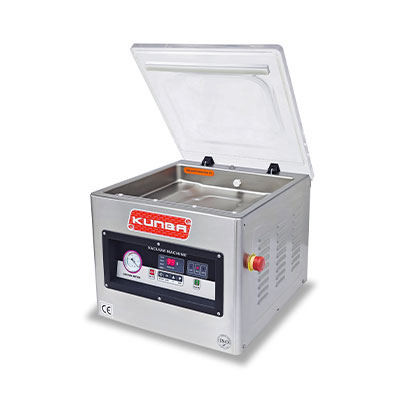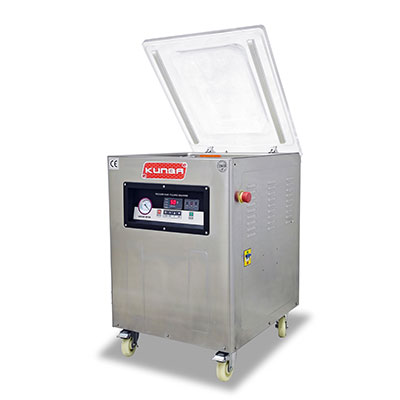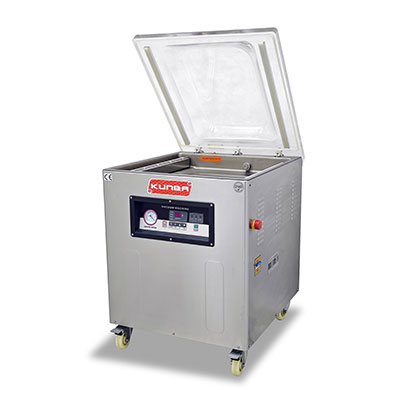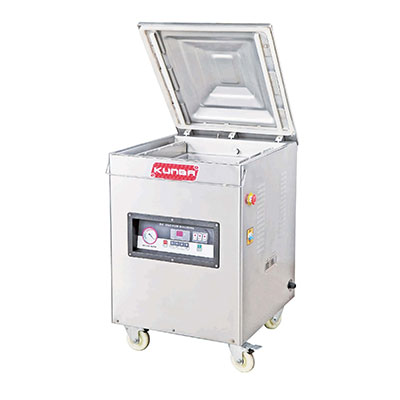
Few things are more frustrating on a production line than a vacuum packaging machine lid that refuses to close. When the chamber lid won’t seal, the machine won’t start—and your packaging operation grinds to a halt.
The good news: most lid-closing issues are straightforward to diagnose and fix. Based on real-world failure data, here are the 6 most common causes—ranked from most to least frequent—along with step-by-step solutions to get your machine back up and running in minutes.
This is the first culprit. Food debris, bone fragments, packaging scraps, or foreign objects get stuck on the sealing ring or the chamber rim, preventing the lid from seating flush.
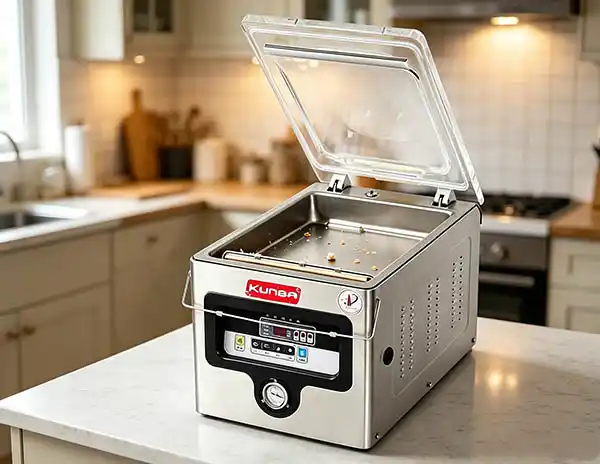
The lid visibly sits at an angle or won’t go down all the way
You feel resistance when pressing the lid closed
The machine won’t initiate the vacuum cycle
Turn off and unplug the machine before cleaning.
Use a soft brush or cloth to thoroughly clean the sealing ring (gasket) and the chamber contact surface.
Pay special attention to corners and crevices where debris tends to accumulate.
Wipe down the entire sealing area with a food-safe cleaning solution.
Prevention tip: Make it a habit to wipe down the sealing area after every production shift. A clean seal area prevents 80% of lid-closing issues.
The rubber or silicone sealing ring (gasket) can slip out of its groove or become worn, hardened, or cracked over time. Even if the lid appears to close, a displaced seal means the chamber won’t hold vacuum.
The lid closes but feels loose or wobbly
The sealing ring is visibly out of its groove
The machine starts but fails to achieve vacuum
Inspect the sealing ring around the chamber opening.
If it has slipped out, press it firmly back into the groove around the entire perimeter.
Check for cracks, hardening, or permanent deformation.
If damaged, replace the seal with an OEM-specified replacement.
Pro tip: When replacing a seal, order the exact model specified for your machine. Using the wrong size or material will cause persistent sealing failures.
On semi-automatic machines, gas springs (lid struts) assist with opening and holding the lid up. When these fail, the lid may become too heavy to press down, or it may not stay open.
The lid is extremely heavy to close
The lid won’t stay open on its own
The lid slams down unexpectedly
Visible oil leakage from the gas spring
Disconnect one end of the gas spring from its mounting bracket.
Manually open and close the lid.
If the lid moves easily and smoothly without the gas spring attached, the gas spring is defective.
Replace the gas spring with an identical model.
Replace in pairs if the machine has two struts—they wear at similar rates.
Over time, hinges can shift from repeated use or accidental impacts. When the lid is misaligned, one side contacts the chamber while the other side leaves a gap.
The lid is visibly crooked or sits at an angle
One side of the lid touches the chamber; the other side has a noticeable gap
Uneven wear on the sealing ring
Loosen the hinge mounting screws slightly—just enough to allow movement.
Align the lid so it sits evenly and parallel to the chamber opening.
Tighten the screws securely.
Test-close the lid and check for even contact around the entire perimeter.
If the hinge itself is bent, cracked, or deformed, it must be replaced. Some machines have adjustable hinge plates with elongated holes that allow fine-tuning the alignment.
Fully automatic machines are equipped with safety light curtains or proximity switches that prevent operation if anything obstructs the chamber area. If these sensors malfunction, the control board may falsely detect an obstruction and refuse to close the lid.
The lid mechanism doesn’t respond when you press “start”
Error codes or warning lights appear on the control panel
The machine worked fine previously but suddenly won’t close
Check the sensor indicator lights—are they showing proper status?
Clean the sensor lenses with a soft, dry cloth—dust and debris can cause false triggers.
Verify sensor alignment—the emitter and receiver must face each other precisely.
Check for loose wiring connections at the sensor terminals.
If cleaning and alignment don’t work, the sensor may need replacement.
On pneumatic automatic machines, cylinders control the lid’s opening and closing movements. When the cylinder fails to actuate or moves weakly, the lid won’t close properly.
Press “start” but the cylinder doesn’t move
The cylinder moves but lacks force to close the lid
Unusual hissing sounds indicating air leaks
Air pressure: Verify the air supply is above 80 psi (≈0.55 MPa). Adjust the regulator if needed.
Air lines: Check for kinked, pinched, or disconnected air hoses.
Solenoid valve: Listen for a click when actuated. If silent, check if the solenoid is receiving power.
Cylinder seals: If air is leaking from the cylinder exhaust, internal seals may be worn and require replacement.
For diagnostic purposes only: On some machines, you can manually press the safety interlock switch with a screwdriver to test other functions.
WARNING: Never place your hands inside the chamber while the machine is running or the safety interlock is bypassed. This is extremely dangerous and can cause serious injury.
A: Yes, but sparingly. Apply a small amount to the hinge pivot points if they are stiff or squeaking. Wipe away excess to prevent dripping onto the sealing area. For heavy-duty or food-grade environments, use a food-safe lubricant instead.
A: The seal should fit snugly in the groove without stretching or bunching. Compare your existing seal against the machine’s specifications. When in doubt, order directly from the machine manufacturer with your model number.
A: This usually points to a faulty or misaligned microswitch that isn’t being triggered when the lid closes. Check if the lid is pressing the switch actuator. Adjust the switch position or replace it if defective.
A: If you’ve worked through all six causes and the problem persists, the issue may be with the control board, vacuum pump, or internal wiring. Contact your machine supplier or a qualified technician for advanced diagnostics.
Most lid-closing problems on vacuum packaging machines come down to one of six root causes—and the vast majority are resolved by cleaning the seal area or inspecting the gasket.
Quick checklist before you call a technician:
Clean the sealing ring and chamber rim
Check if the gasket is seated properly in its groove
Test the gas springs
Check hinge alignment
Clean safety sensor lenses
Verify air pressure >80 psi
KUNBA offers genuine OEM replacement seals, gas springs, and maintenance kits for all major vacuum packaging machine brands. Using authentic parts ensures proper fit, reliable performance, and maximum machine uptime.
Need help identifying the right replacement part for your machine? Contact KUNBA with your machine model number for fast, expert support.

GET A QUOTE

 中文
中文 English
 Français
 Español
 Português