Beef jerky is a high-protein snack with a loyal following—but it is surprisingly fragile when it comes to storage. Moisture absorption turns chewy jerky into soggy, rubbery strips. Mold can develop even in seemingly dry products. And oxygen exposure causes fat oxidation, producing off-flavors and rancidity that ruin the eating experience.
Vacuum packaging is the industry standard for protecting jerky, but using a commercial vacuum packaging machine correctly requires more than just pressing a button. The difference between jerky that stays fresh for 12 months and jerky that spoils in 30 days often comes down to a few critical details: moisture level before packaging, bag material, vacuum settings, and powder management.
This guide covers the complete workflow for commercial jerky vacuum packaging—from drying to sealing—so you can deliver a product that stays fresh, safe, and shelf-stable.
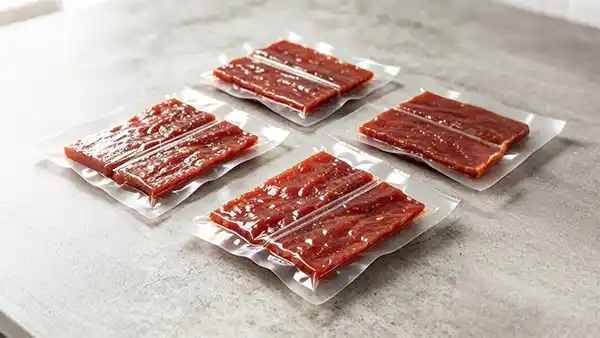
This is the single most important step. No vacuum sealer can fix jerky that is packaged too moist.
For food safety, jerky must have a water activity (Aw) of 0.85 or lower when packaged under air. If you are packaging under oxygen-free conditions (vacuum), the acceptable Aw threshold can extend to 0.88. However, for maximum shelf life and mold prevention, targeting Aw ≤ 0.85 is the industry standard.
Water activity measures the "available" moisture in a product—not total water content. Microorganisms need available water to grow. At Aw below 0.85, most bacteria and many molds cannot reproduce.
Recommended method: Use a water activity meter (such as those from AQUALAB or similar brands). These instruments provide accurate, repeatable readings and are essential for commercial production.
No instrument? Use the bend test:
Properly dried jerky should bend and crack but not break completely in half
If it bends without cracking → too moist → continue drying
If it snaps cleanly in half → over-dried (acceptable but brittle)
Let jerky cool to room temperature before packaging. Warm jerky contains residual moisture that can condense inside the bag.
If using a marinade with sugar or oil, these ingredients can bind moisture—account for this in your drying time.
Test multiple pieces from different areas of your batch to ensure uniform dryness.
Not all vacuum bags are created equal. For jerky, oxygen barrier performance is the priority.
The best option for jerky is a multi-layer bag with an EVOH barrier layer. EVOH provides excellent oxygen resistance while remaining transparent, allowing customers to see the product.
Key specifications:
Thickness: 80–100 microns
Material layers: Typically PE/nylon/EVOH co-extrusion
Oxygen Transmission Rate: Low OTR is critical for holding a vacuum and preventing oxygen ingress over time
Standard PE bags have high oxygen permeability. They may look similar but will allow oxygen to seep through over weeks and months, causing rancidity and flavor loss.
Aluminum foil laminate bags: The gold standard for barrier protection—blocks nearly all oxygen and light. Ideal for higher-fat jerky or longer shelf life.
Metalized polyester (MET-PET): A mid-range option that reflects light and blocks oxygen and moisture.
One-way valve bags: Useful if your jerky is still off-gassing small amounts of moisture or volatile compounds.
For chamber vacuum machines, ensure the bags you choose are compatible with chamber sealing—some textured or embossed bags are designed specifically for external suction sealers.
Commercial vacuum packaging machines offer adjustable vacuum levels and seal times. Here are the recommended settings for jerky.
Jerky is rigid and dry—it does not deform under high vacuum as fresh meat does. However, excessive vacuum pressure can turn the bag into a "rock" that punctures the film.
Recommended approach:
Target -0.8 to -0.9 bar
If your machine has a "soft-air" or "gentle" mode for dry snacks, use it
For very brittle or stick-shaped jerky, consider stopping vacuum slightly earlier to avoid crushing
Seal time depends on bag thickness and material:
80-micron bags: ~1.5 seconds
100-micron bags: ~1.8–2.0 seconds
Thicker foil laminates: May require 2.5+ seconds
Test your seal: After sealing, inspect the seal line—it should appear clear and uniform. If it looks cloudy or has wrinkles, increase seal time by 0.5-second increments.
The seal will fail if the bag mouth is wet, oily, or has spice particles. Jerky often has surface oils from marinades and spice rubs.
Best practices:
Wipe the inside of the bag opening with a clean, dry cloth before sealing
Leave 2–3 inches of empty space at the top of the bag
Ensure the seal bar area is clean and free of debris between cycles
This is the most overlooked issue in jerky packaging—and the most expensive.
Jerky seasonings—chili powder, garlic powder, smoke particles, and marinade residues—are fine enough to be pulled into the vacuum pump during the evacuation cycle. Over time, this powder accumulation destroys pumps, leading to costly repairs and downtime.
Before placing jerky in the bag, gently shake or tap each piece to remove loose seasoning. This simple step reduces the amount of powder that can be drawn into the pump.
In a chamber vacuum sealer, fold the open end of the bag upward or position it so the opening faces away from the vacuum port. This prevents powder from being sucked directly into the pump inlet.
For commercial operations, install a removable dust filter between the chamber and the vacuum pump. These filters use physical interception and graded filtration to block foreign objects from entering the pump at the source.
Benefits of powder filters:
Protect the vacuum pump from premature failure
Allow the machine to handle seasoned products smoothly
Reduce maintenance costs and downtime
Many commercial vacuum packaging machine suppliers offer powder filters as optional accessories.
For snack sticks and portioned jerky, consistency and presentation matter.
Use long, narrow bags designed for stick products. Each bag typically holds 5–10 sticks, depending on size.
Bag sizing:
Allow 2–3 inches of space above the product for the seal
Do not overfill—crowded bags seal poorly
For premium presentation:
Dividing molds keep sticks separated and prevent them from sticking together
Thermoformed trays create individual cavities that hold each piece securely
These solutions also improve visual appeal on retail shelves and make it easier for customers to remove individual portions.
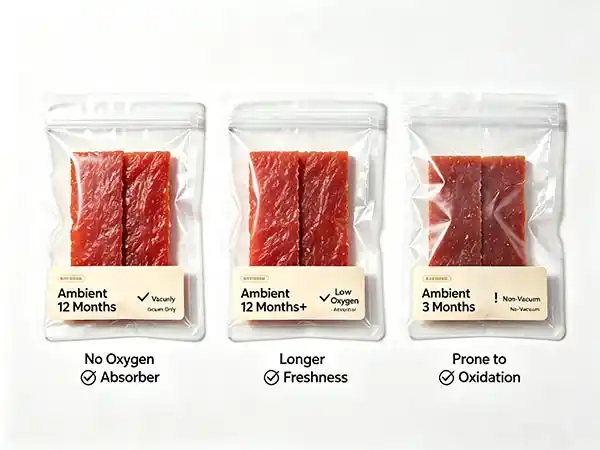
Vacuum packaging dramatically extends jerky shelf life, but the exact duration depends on storage conditions.
| Packaging Method | Storage Condition | Expected Shelf Life |
|---|---|---|
| Vacuum bag only | Room temperature (≤21°C / 70°F) | 12 months |
| Vacuum bag + oxygen absorber | Room temperature | 12+ months |
| Vacuum bag | Refrigerated (4°C / 40°F) | 18–24 months |
| Vacuum bag + oxygen absorber | Refrigerated | 2–3 years |
| Non-vacuum (standard pouch) | Room temperature | ~3 months |
Oxygen absorbers are highly effective for jerky with Aw ≤ 0.85. They irreversibly absorb oxygen inside sealed packaging to less than 0.01%. This is particularly valuable because even vacuum packaging leaves some residual oxygen, and microscopic pores in bags can allow oxygen infiltration over time.
Pro tip: Pair oxygen absorbers with vacuum-sealed packaging for maximum protection.
If your vacuum-sealed jerky develops mold, investigate these three root causes:
This is the most common cause. Even with perfect vacuum sealing, jerky with Aw above 0.85 provides enough available moisture for mold growth.
Fix: Measure Aw before packaging. Extend drying time or adjust your dehydration process.
Jerky has sharp edges that can puncture bags under vacuum pressure. Even tiny pinholes allow oxygen and moisture to enter over time.
Test method: Submerge a sealed bag in water and apply gentle pressure. Watch for bubbles—any bubbles indicate a leak.
Fix: Use thicker bags (100+ microns) or double-bag sharp products.
Temperatures above 30°C (86°F) accelerate both oxidation and any residual microbial activity.
Fix: Store vacuum-packed jerky in a cool, dry location. Refrigeration is ideal for extended shelf life.
Yes, but with caution. Moisture absorbers (desiccants) are generally not necessary if your jerky is properly dried to Aw ≤ 0.85. In fact, over-drying can make jerky brittle and unpalatable. Oxygen absorbers are more effective for jerky preservation than moisture absorbers.
Vacuum packing does not change jerky texture—the hardness is determined during the drying process. However, vacuum sealing prevents further moisture loss, which helps maintain the intended texture rather than allowing it to become overly brittle.
For opened retail bags, the best option is a resealable zipper pouch with a high-barrier film. If you are using standard vacuum bags, you can:
Use a clip or fold and tape for short-term storage
Transfer remaining jerky to a smaller vacuum bag and re-seal
Store in an airtight container with an oxygen absorber
Successful jerky packaging comes down to three pillars:
Low moisture – Achieve Aw ≤ 0.85 before packaging
High-barrier bag – Use EVOH or foil laminate, 80–100 microns
High vacuum – Target 98–99% vacuum with a clean, dry seal area
Beyond these basics, commercial producers must address the unique challenge of seasoning powders. Installing a powder filter on your vacuum packaging machine protects your equipment investment and ensures consistent production quality.
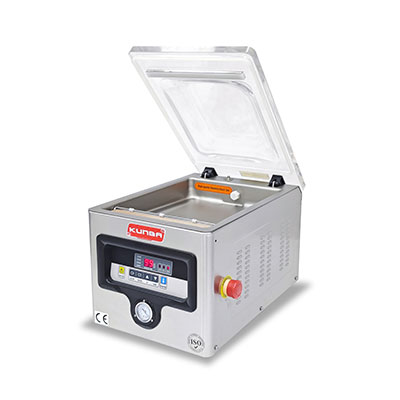
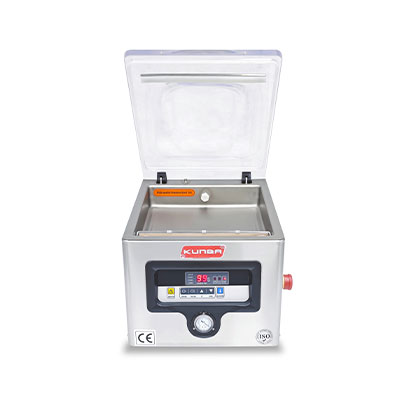
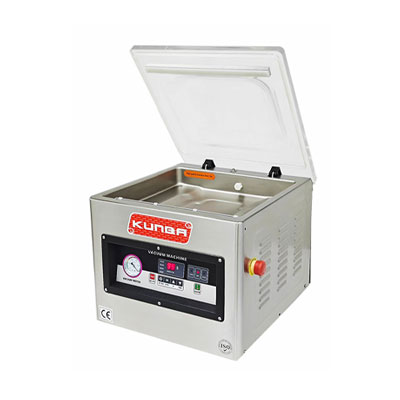
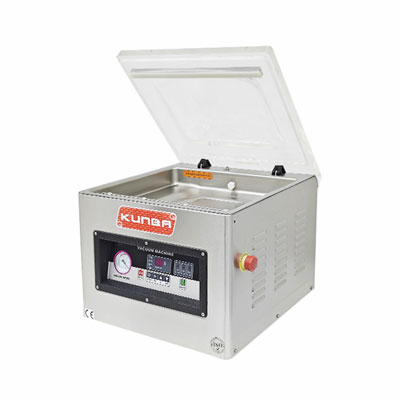
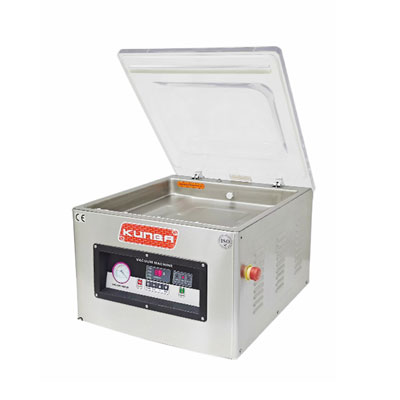
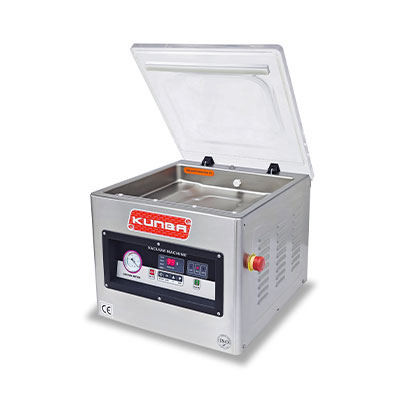
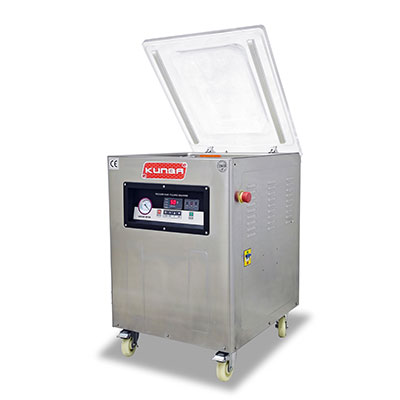
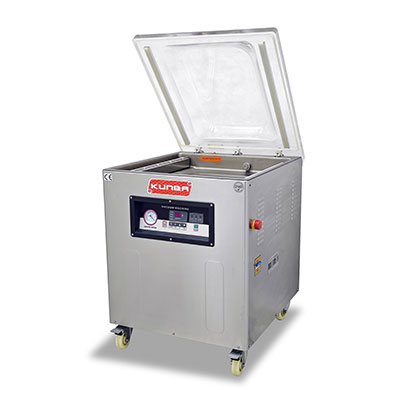
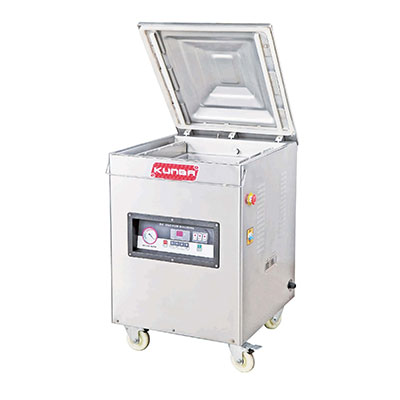
KUNBA offers commercial vacuum packaging machines with integrated powder filtration systems—designed specifically for seasoned meats, spices, and powdered products. Protect your product and your equipment with the right solution for your production line.

GET A QUOTE

 中文
中文 English
 Français
 Español
 Português