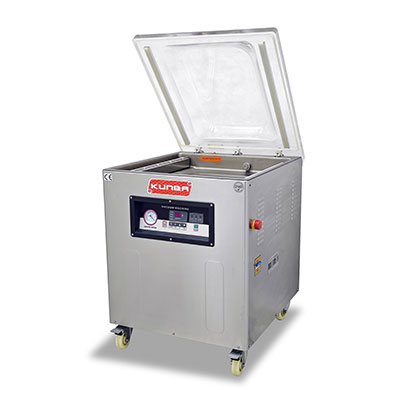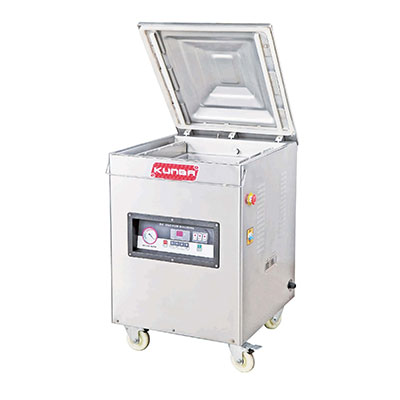
For bakeries, pastry factories, and frozen dough producers, product appearance and texture are everything. Yet when you try to extend shelf life with vacuum packaging, a frustrating problem arises – soft, porous bread, delicate puff pastries, and beautifully decorated cream cakes often get flattened and deformed under the powerful suction of a vacuum sealer, ruining both look and mouthfeel.
This article covers 4 proven methods to vacuum pack baked goods while preserving their shape – from simple techniques to professional solutions.
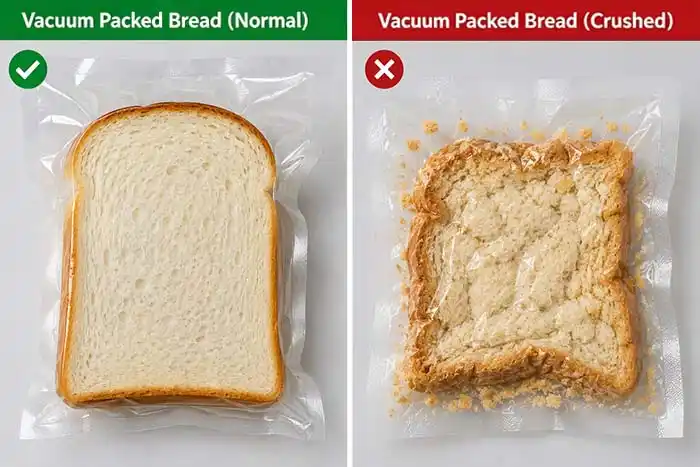
Bread and cakes are full of air cells, which give them their soft, airy texture. During vacuuming, the external atmospheric pressure collapses these air cells, causing the product to shrink and become dense. As one expert guide puts it: “the crumb is full of air, so too much suction can turn a beautiful loaf into a compact block.”
Puff pastries, icing decorations, and buttercream toppings easily crack, shed, or get imprinted under vacuum pressure. Even seemingly sturdy cakes with cream cheese frosting can suffer from pressure marks.
Vacuum packaging removes air, but it can also draw moisture out of the product if overdone. Improper operation makes bread dry and hard. Never vacuum pack warm baked goods – residual heat creates condensation inside the bag, leading to sogginess and even mould growth.
Place the cake or bread into a hard plastic container. The rigid walls withstand atmospheric pressure, so the interior remains at normal pressure – virtually no compression on the product.
Ideal for: multi‑layer cream cakes, decorated cookies, macarons, and pastries with delicate icing.
Many household vacuum sealers come with a container‑vacuum function that evacuates air directly from the container.
Place the product into a pre‑formed rigid tray and seal it with a film using a vacuum skin packaging machine. The film conforms to the product without applying additional pressure – oxygen is removed while the shape stays intact.
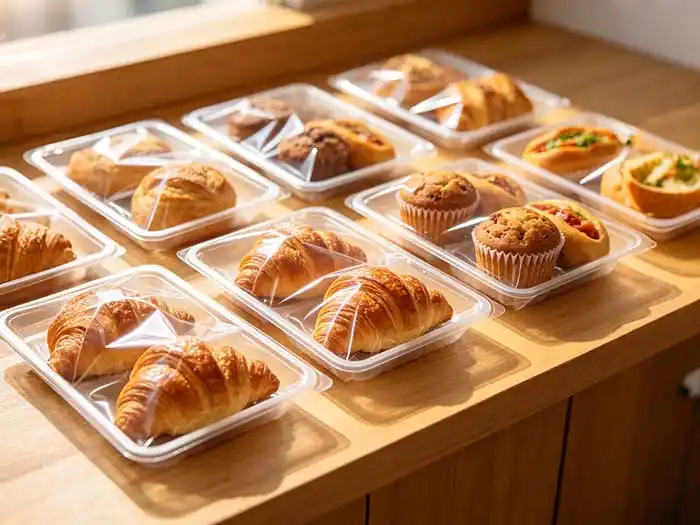
Professional systems like MULTIVAC’s Cooling@Packing can even package baked goods straight from the oven (95°C) and cool them to ~30°C in seconds, saving cooling space and completing packaging simultaneously.
For bread and ordinary pastries, set the vacuum level to 50‑70% – not 100%.
Why is 50% enough? Because mould growth doesn’t require an absolutely oxygen‑free environment; removing most of the oxygen already slows mould significantly. At 50% vacuum, you extend shelf life while keeping the product soft and nearly undeformed.
Added benefit: lower vacuum also shortens cycle time, boosting packing efficiency.
Many modern vacuum sealers feature a “SOFT” or “MANUAL” mode for delicate foods. If your machine lacks preset modes, use the pulse function – short bursts of suction with pauses, stopping as soon as the bag just conforms to the product.
Freeze the baked goods in a regular freezer for 2‑4 hours until completely firm. The frozen structure resists external pressure, so the product won’t be crushed during vacuuming.
Long‑term frozen storage of semi‑finished products – frozen dough, pre‑baked bread, bulk‑made pastries. For items that will be frozen for months, vacuum packaging also prevents freezer burn.
Slice bread before freezing for easy portioning later.
Thawed products regain a texture very close to fresh.
Pre‑freezing is the most foolproof method for almost any baked good.
Place a rigid plastic dome or support structure inside the bag, with the product underneath. When the bag is evacuated, the dome bears the pressure, shielding the product from crushing.
Wrap the bread or pastry in a layer of food‑grade corrugated paper or heavy cardstock. This provides a buffer zone – simple, low‑cost, and ideal for daily bulk packing.
Use thicker bags: For delicate pastries (e.g., soft cookies, sponge cakes), choose 4‑5 mil thickness; for sturdier items (brownies, muffins), 2‑3 mil works.
Interleave with baking paper: If stacking multiple layers in one bag, place small pieces of parchment paper between layers to prevent sticking and pressure marks.
The “suction barrier” trick: Place a small rigid object (like a wooden spoon handle or folded cardstock) near the bag opening to act as a physical barrier that disperses suction force.
Here is the standard procedure for a sliced sandwich loaf:
Cool completely to room temperature – any residual heat will create condensation inside the bag.
Choose a bag at least 2 inches larger than the loaf, leaving 1‑2 inches of sealing space at the opening.
Place the bread gently into the bag without squeezing.
Set vacuum level to 60% (or select “SOFT” mode), sealing time 1.2 seconds.
Start the machine and observe – slight compression is acceptable, but visible deformation is not.
After sealing, gently shake the bag to allow the bread’s internal air cells to recover naturally.
| Product Type | Storage Condition | Normal Shelf Life | Vacuum‑Packaged Shelf Life |
|---|---|---|---|
| Bread (room temperature) | ~21°C (70°F) | 3‑5 days | 1‑2 weeks |
| Bread (refrigerated) | 4‑7°C (40‑45°F) | 1‑2 weeks | 4‑6 weeks |
| Bread (frozen) | -18°C (0°F) | 2‑3 months | 6‑12 months |
| Puff pastries | Room temperature | a few days | 4‑6 weeks |
Vacuum packaging significantly slows oxidation and microbial growth by removing oxygen. In frozen storage, it also prevents freezer burn, protecting texture and flavour.
Yes. The best method is pre‑freezing: freeze the croissants for 2‑4 hours until firm, then use a low vacuum level (50‑60%) or pulse mode. For extra protection, insert a rigid support or corrugated liner inside the bag to shield the flaky crust.
No – if done correctly. Vacuum packing removes oxygen, which slows starch retrogradation. However, hot packaging causes condensation, and excessive vacuum draws out moisture. The key is to cool completely and use a moderate vacuum.
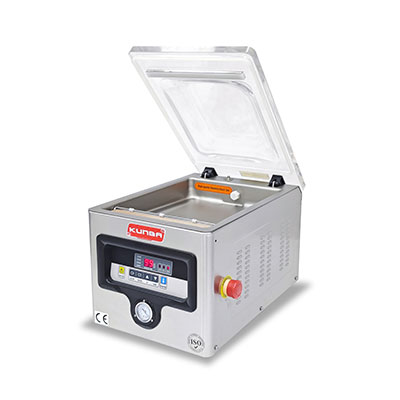
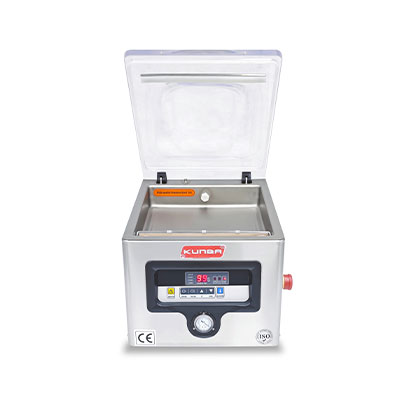
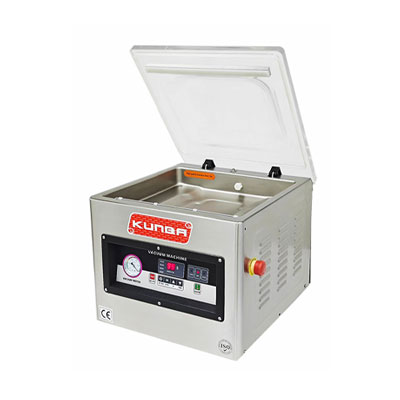
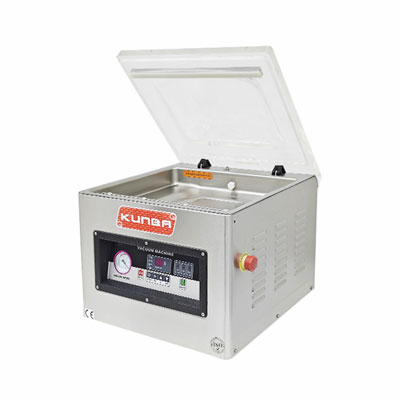
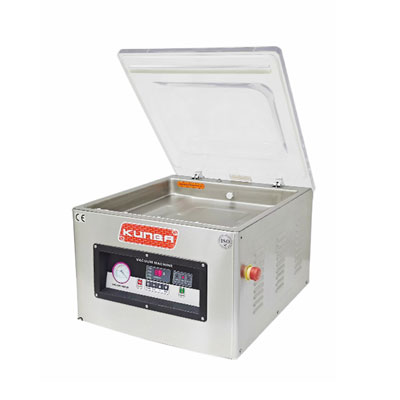
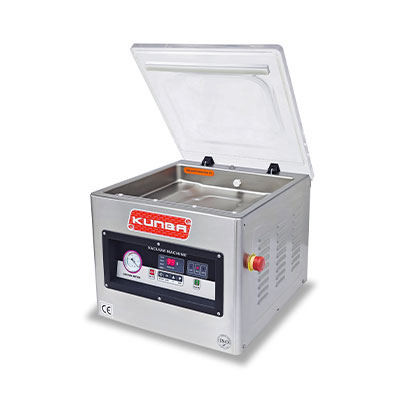
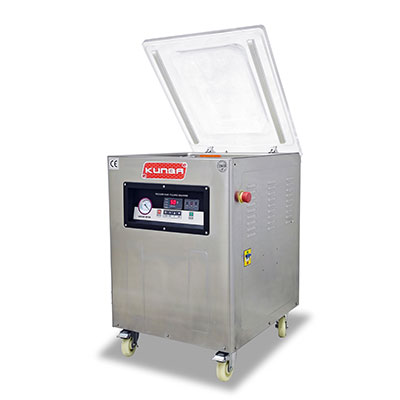
A chamber vacuum sealer is the safer choice.
Chamber sealer: The entire chamber is evacuated, so the pressure is balanced inside and outside the bag, resulting in even compression and less risk of localised dents. Ideal for batch production.
External sealer: Suction is applied only at the opening, so force is concentrated on the product – more likely to cause local crushing. However, if it has a “pulse” or “soft” mode, it can still work for small batches of delicate items.
Baked goods can be vacuum packaged – the key is to choose the right method based on product fragility:
Delicate cakes, cream‑decorated items, macarons → rigid trays or containers
Ordinary bread, toast, dinner rolls → reduce vacuum to 50‑70%
Frozen‑storage semi‑finished products → pre‑freeze before packing
Puff pastries and fragile goods → add protective inserts
With these techniques, vacuum packaging can dramatically extend shelf life while safeguarding appearance and integrity during storage and transport.
Final reminder: No matter which method you choose, always cool completely before packing – condensation from residual heat will undo all your efforts. For more information on selecting the right vacuum packaging equipment for your bakery, contact us for tailored advice.

GET A QUOTE

 中文
中文 English
 Français
 Español
 Português