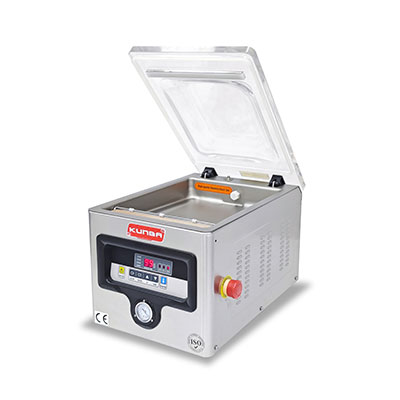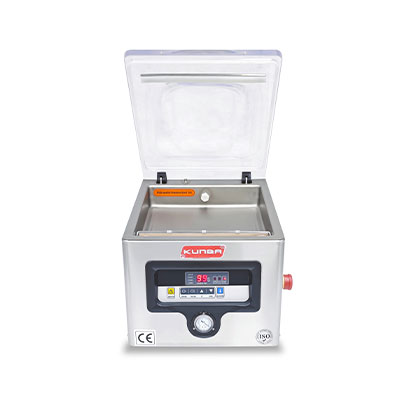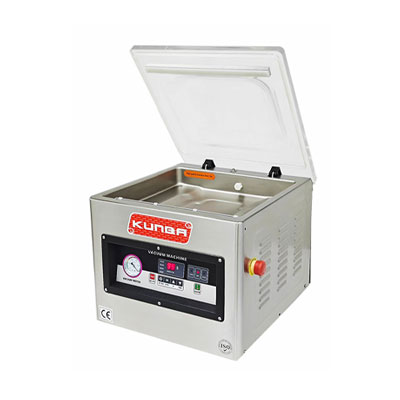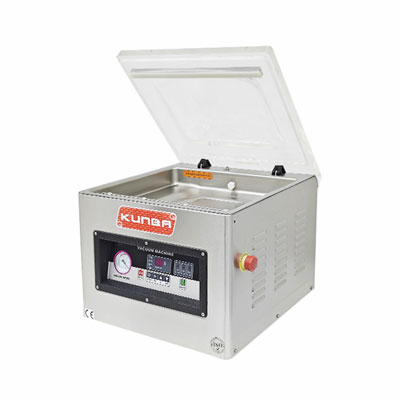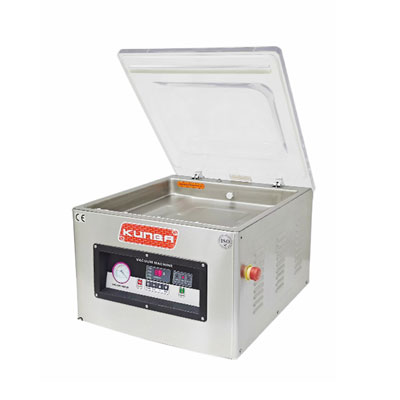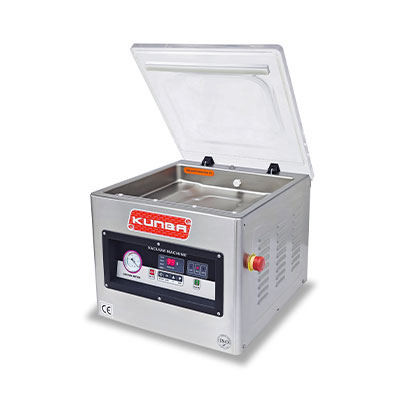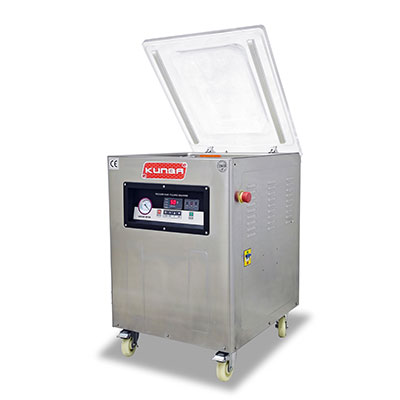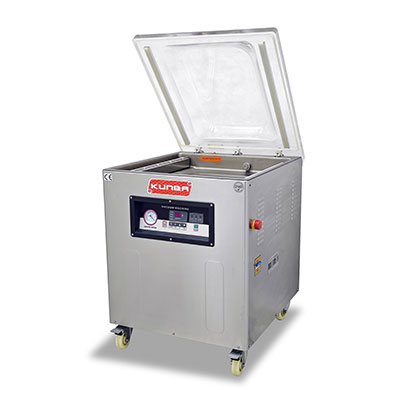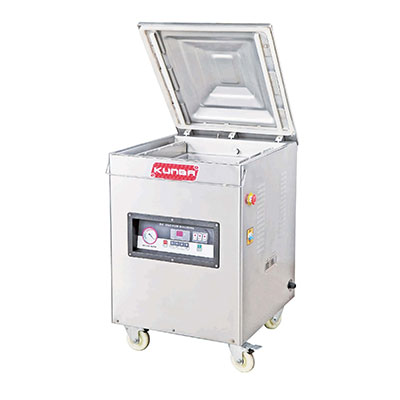
Counter space in a professional kitchen is prime real estate – refrigerators, ovens, prep stations, and smallwares already compete for every inch. A floor‑standing model promises higher throughput, but you dread giving up valuable floor area. This guide cuts through the guesswork with a head‑to‑head comparison based on actual machine footprints, ergonomics, mobility, and cleaning access – so you can match the machine to your layout, not the other way around.
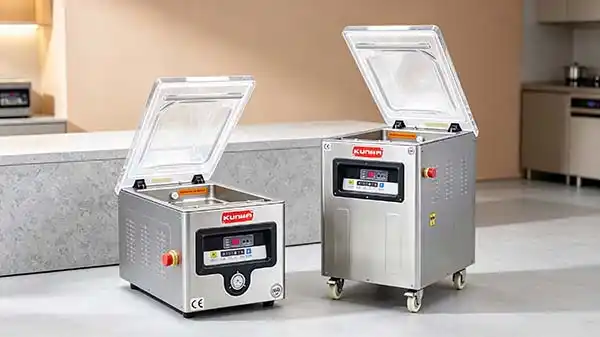
To compare space requirements accurately, you must look beyond the machine’s base dimensions. Consider clearance for lid opening, side ventilation, and product loading/unloading. The table below aggregates data from popular commercial chamber sealers currently on the market.
| Type | Typical Dimensions (W×D×H) | Machine Footprint | Additional Clearance Needed | Chamber Volume |
|---|---|---|---|---|
| Tabletop Single‑Chamber | 20" × 16" × 16" | 2.2 sq ft | Front clearance for lid swing | 0.8 cu ft |
| Floor‑Standing Single‑Chamber | 24" × 20" × 34" | 3.3 sq ft | Side clearance for ventilation | 2.0 cu ft |
| Floor‑Standing Double‑Chamber | 32" × 28" × 38" | 6.2 sq ft | Rear space for trolley or tray stand | 4.5 cu ft |
Key takeaway:
Floor‑standing machines occupy 1.5 to 3 times the floor area of their tabletop counterparts, but they deliver 2 to 4 times larger chamber capacity. That trade‑off is acceptable if you process bulk items or high volumes – but it demands a dedicated spot in your workflow.
Ergonomics directly affects operator fatigue, productivity, and long‑term health – especially when packaging hundreds of bags per shift.
Tabletop units are designed to sit on a standard counter. The operator works with arms at or slightly below elbow level, which is comfortable for light‑ to medium‑weight products. The lid opens upward, and loading is done at a natural standing posture – no excessive bending.
Floor‑standing machines have their own legs or casters, with the chamber typically 30"–40" above the floor. Because the chamber is deeper and the lid is heavier, operators often need to bend forward to place large items inside. Over a 500‑cycle day, that repeated stooping can strain the lower back.
Recommendation:
If your staff packages fewer than 500 bags per day and products are under 10 lb each, a tabletop sealer minimizes fatigue.
For more than 500 bags/day or heavy/bulky products, opt for a floor‑standing model. Many manufacturers offer height‑adjustable legs or optional stands to fine‑tune the working height – invest in those to reduce ergonomic risk.
Not every kitchen has a fixed packaging station. Sometimes you need to share the machine between prep lines, or roll it out of the way during cleaning.
Tabletop machines weigh between 50 and 100 lb. They can be carried by two people or fitted with optional casters. Moving them between counters is feasible, especially if you install quick‑disconnect power cords.
Floor‑standing models are heavy – typically 200–500 lb. They usually come with heavy‑duty casters, but those are meant for occasional repositioning, not daily relocation. Pushing a 400‑lb machine across a tile floor is strenuous and can damage flooring. Also, moving it requires clearing a path and often unplugging fixed utilities.
Decision point:
If you plan to use the sealer in one permanent spot → floor‑standing is fine.
If you need to share between production lines or store it away when not in use → the tabletop’s light weight and small size give you clear flexibility.
Sanitation is non‑negotiable in commercial kitchens. Hard‑to‑reach areas trap food debris, moisture, and bacteria.
Tabletop sealers are easily lifted off the counter, allowing you to wipe down the entire counter surface and the machine’s underside. Because they sit on rubber feet, there’s minimal gap – but since you can move them, deep cleaning is straightforward.
Floor‑standing machines present a challenge: their base is close to the floor, and crumbs, drips, and cleaning water can accumulate underneath. If the machine has fixed legs shorter than 4 inches, a standard mop or floor scrubber won’t fit underneath. Over time, this creates a hygiene hotspot.
What to look for:
Choose floor models with ≥4‑inch leg clearance or with casters that raise the base high enough for a mop to pass.
Check if the bottom pan is sealed or has drainage holes – some designs trap moisture, leading to rust.
Tabletop units win on cleaning ease, but if you go floor‑standing, ensure you can tilt or roll it for weekly under‑machine cleaning.
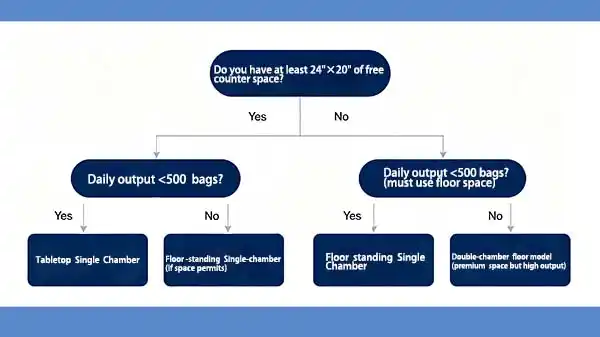
Now, let’s put everything together with a simple decision framework based on your daily packaging volume and available space.
Practical guidelines:
<500 bags/day + available counter → tabletop single‑chamber.
500–1500 bags/day + floor space → floor‑standing single‑chamber.
>1500 bags/day → double‑chamber floor model. Yes, it occupies ~6 sq ft, but it doubles throughput, reducing labor cost per bag – a trade‑off that pays off in busy operations.
Many commercial kitchens have prep tables or stainless steel workbenches. Did you know that some floor‑standing machines can be converted into under‑counter units?
By removing the casters and installing optional low‑profile feet, you can slide the machine under a standard 36"‑high table, leaving only the chamber and control panel protruding slightly above the tabletop. This setup effectively zeroes out floor footprint because the space under the table would otherwise be wasted.
Requirements:
Table height must be at least 34" to accommodate the machine’s height.
The machine’s ventilation grilles must remain unobstructed.
You’ll need to pull the machine out for bag loading – but with casters removed, you can install drawer slides or a pull‑out platform.
KUNBA offers custom mounting kits for this exact scenario – ask about their “under‑table” configuration if floor space is extremely tight.
Q1: Can I put a floor‑standing machine on a sturdy table?
Technically yes, but it’s rarely recommended. Floor models weigh 200+ lb and have tall profiles – placing them on a table raises the chamber height to an awkward 60"+, forcing operators to work overhead. More importantly, the vibration and weight can destabilize the table, creating a safety hazard. Stick to tabletop models for countertop use.
Q2: Do I need ventilation clearance for either type?
Yes. Both generate heat from the vacuum pump and sealing bar. Tabletop units need at least 2" clearance on the sides for airflow. Floor‑standing models typically require 4" on each side and 6" at the rear – check your user manual. Blocked vents reduce pump life and may void the warranty.
Q3: Which type is easier to repair?
Tabletop machines are simpler and more accessible – you can flip them over on a workbench for pump or PCB replacement. Floor‑standing units have components mounted inside a cabinet; repairs often require crawling underneath or tilting the heavy machine. However, floor models usually have larger pumps and better cooling, so they need less frequent service. If you have an in‑house maintenance team, tabletop wins on serviceability.
There’s no universal “best” – only the best fit for your kitchen’s dimensions, daily output, and staff comfort.
Choose a tabletop sealer if you have limited counter space, process under 500 bags per day, handle light products, and need to move the machine between stations. It’s the entry‑level workhorse that punches above its weight in flexibility.
Choose a floor‑standing single‑chamber if you have dedicated floor area, process 500–1500 bags daily, handle heavier items, and can tolerate a slightly larger footprint for higher chamber capacity.
Choose a floor‑standing double‑chamber if you run high‑volume production and can allocate 6+ sq ft – the efficiency gain will justify the space.
Remember: the true cost of a machine includes not just its price tag, but also its spatial impact on your workflow. Measure twice, sketch your layout, and always account for clearances.
KUNBA offers a full range of tabletop and floor‑standing vacuum packaging machines, plus customised installation solutions – including casters, adjustable feet, and under‑table mounting kits. Contact our space‑planning team for a free layout consultation and find the model that fits your kitchen like a glove.

GET A QUOTE

 中文
中文 English
 Français
 Español
 Português