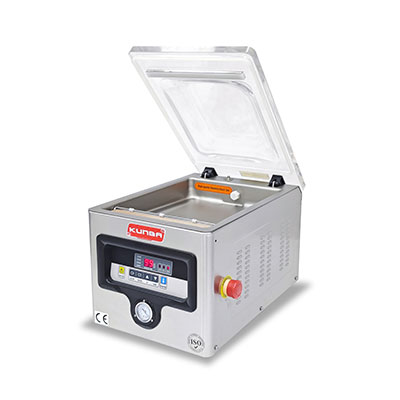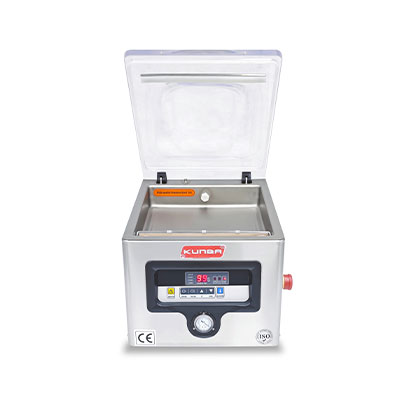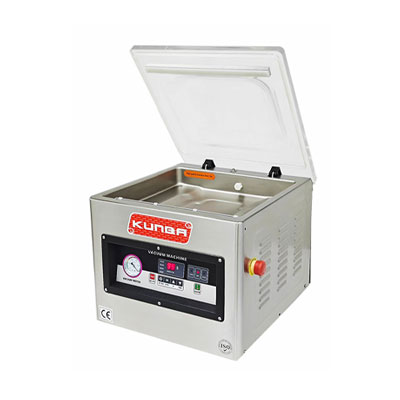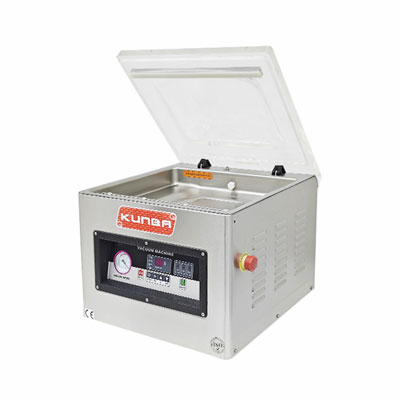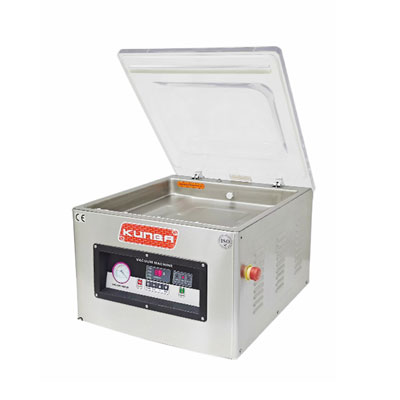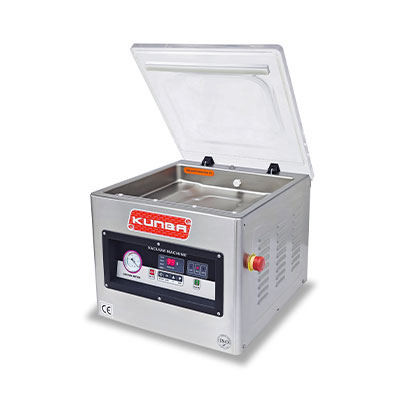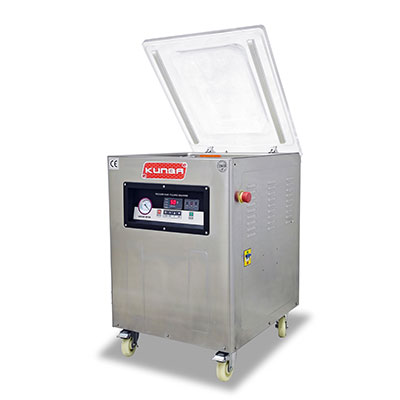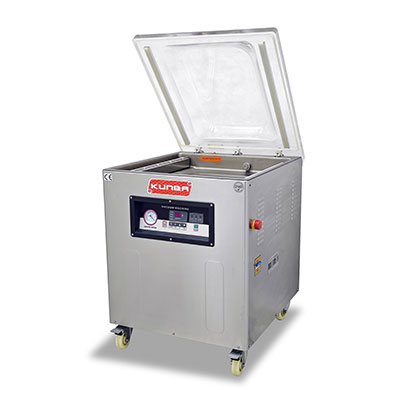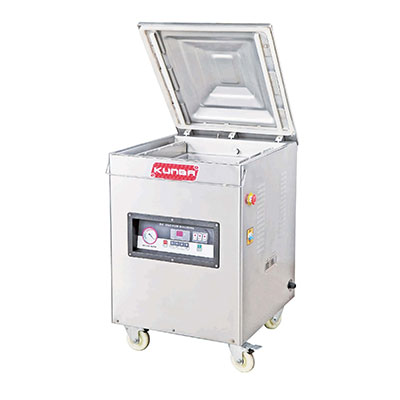
You walk up to your vacuum packaging machine during a production run. The pump sounds sluggish. The vacuum gauge is struggling to hit the usual mark. You check the oil sight glass, and instead of a clear, amber fluid, you see a thick, white, milky substance churning inside.
This is not a simple cosmetic issue. Milky oil is a silent killer of vacuum pumps.
When your vacuum pump oil emulsifies, it loses its ability to lubricate, seal, and cool. If left unchecked, the pump will overheat, seize, and require a costly replacement. In this guide, we will explain exactly why your vacuum packaging machine oil turns milky, how to fix it right now, and how to prevent water damage from destroying your equipment.
To understand the problem, you have to understand the chemistry. "Milky oil" is the common term for oil emulsification. This occurs when two immiscible liquids—oil and water—mix violently inside the pump chamber.
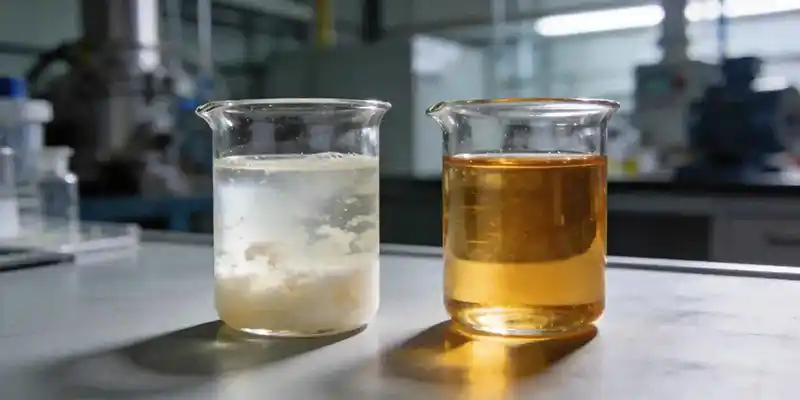
Visual Comparison:
New Oil: Amber, clear, and flows like syrup.
Emulsified Oil: Opaque, beige or white, and looks like a latte or milkshake
Water is a terrible lubricant. When your oil turns milky, the water droplets prevent the oil film from adhering to the rotor, vanes, and stator.
Loss of Lubrication: Metal rubs on metal, generating extreme heat.
Vane Wear: Carbon or plastic vanes grind down rapidly.
Pump Seizure: Rust forms on internal cast iron components, locking the rotor.
Efficiency Drop: The pump can no longer pull a deep vacuum.
You cannot fix the problem until you stop the source. In a food packaging environment, water intrusion happens in three specific ways.
This is the most common culprit. When you package fresh meat, seafood, vegetables, or ready-to-eat meals, the product contains cellular water. During the vacuum cycle, the pressure drops so low that water turns to vapor at room temperature. That vapor is pulled directly into the pump. Once inside the hot pump, the vapor condenses back into liquid water, mixing with the oil.
If your packaging room is humid or cold, the pump acts as a condenser. Every time the pump turns off and cools down, it breathes in moist atmospheric air. That moisture condenses on the cold internal walls of the pump.
Starting a cold pump and immediately pulling a vacuum on wet products is a recipe for disaster. A cold pump has internal surfaces below the dew point. Steam hits the cold metal and turns to water instantly.
Old oil has already absorbed a certain amount of water. Once the oil reaches its saturation point, any additional water immediately causes the mixture to turn milky.
Do not just "top off" the milky oil. That is like putting new coffee into a cup of mud. You must flush the system completely.
Estimated time: 20 minutes. Tools: New vacuum pump oil, drain pan, Allen wrench.
Turn off the machine. Open the drain port. Allow all the milky, white oil to drain completely into a pan.
Close the drain port. Pour in a small amount of fresh, clean vacuum pump oil. Run the pump for 10-15 seconds without attaching a bag or chamber. This flushes the residual emulsion off the vanes and rotor. Stop the pump. Drain this rinse oil out immediately. You will likely see that it is still milky.
Close the drain port firmly. Fill the pump with new, high-quality vacuum pump oil up to the center of the sight glass.
If your pump has a gas ballast valve, open it fully. Run the pump for 30 minutes with the inlet port blocked or closed. This will heat the oil to 70-80°C and evaporate any trace moisture left in the system.
The single best feature on your vacuum pump for preventing milky oil is the gas ballast valve. Yet, 90% of maintenance staff ignore it.
How it works:
During the compression stroke, the gas ballast introduces a small amount of dry, atmospheric air into the compression chamber. This raises the mixture's temperature, preventing water vapor from condensing into a liquid. The water stays as a vapor and is exhausted out of the pump.
Operation Guide:
Packaging wet products: Keep the gas ballast valve open during the entire cycle.
Packaging dry products: Keep the valve closed.
Warm-up routine: Open the valve for the first 5 minutes of the day to purge condensation.
You need a schedule based on your food type. Waiting for the oil to look white is waiting too long.
| Product Type | Oil Change Frequency | Runtime Equivalent |
|---|---|---|
| Wet Products (Raw meat, seafood, soup) | Every 40 hours (Weekly) | 1 week of production |
| Semi-Wet (Cheese, bread, deli meat) | Every 100 hours (Bi-weekly) | 2 weeks |
| Dry Products (Coffee, powders, electronics) | Every 200 hours (Monthly) | 4 weeks |
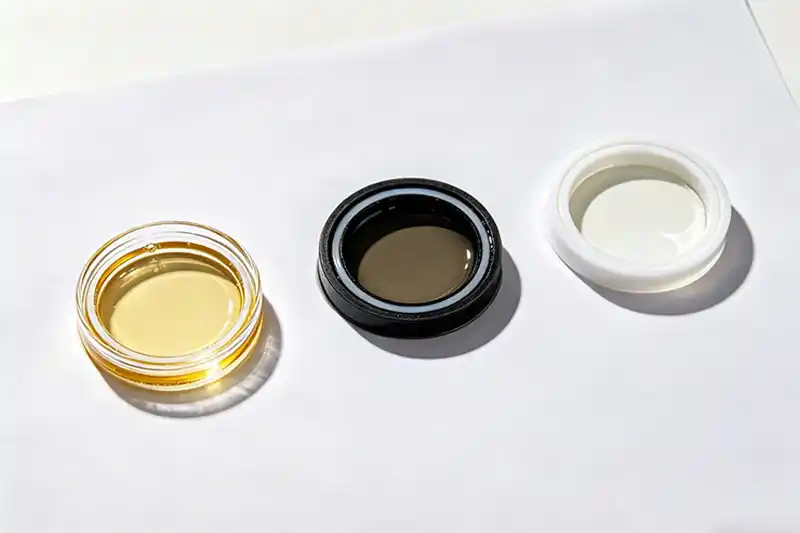
Keep a white paper coffee filter or index card near the machine.
Use a pipette or dropper to take one drop of oil from the pump.
Drop it onto the white paper.
Inspect:
Clear amber ring: Good.
Black center: Carbon dust present (normal wear, change soon).
Milky spreading ring: Water contamination detected. Change immediately.
If you package high-moisture foods like chicken thighs or fresh fish, an aggressive maintenance schedule might not be enough. You need hardware.
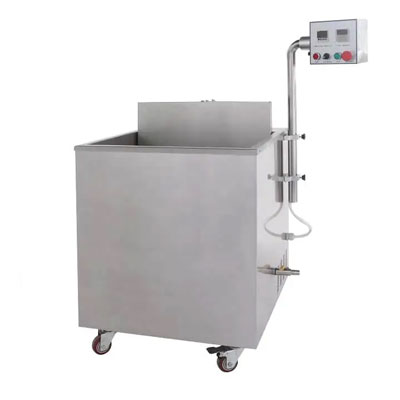
Install a water separator on the intake line between the vacuum chamber and the pump.
How it helps:
It cools the incoming humid air, forcing water to condense into a catch bowl before it reaches the pump.
It traps 85-95% of liquid moisture.
It extends oil life by 5x.
Recommendation: KUNBA’s inline moisture traps come with an automatic float drain. When the water collects, the float drops and drains it out automatically. You just empty the bottle once a day.
You performed the flush procedure. You added new, expensive oil. But the machine still won't seal bags properly. The needle on the vacuum gauge is stuck at -0.6 MPa or -0.7 MPa.
Diagnosis: The damage is already mechanical.
Cause: The water rusted the pump housing or wore down the vanes.
Solution: Replace the vanes or replace the entire pump unit.
Rule of Thumb: If new oil doesn't restore full vacuum within 10 minutes of running, the pump requires service.
No. Never. Automotive oil contains detergents and additives that foam violently under vacuum. It will also outgas (release vapors) that contaminate your food bags and ruin your vacuum level. Only use high-quality vacuum pump oil with low vapor pressure.
Milky oil is a hazardous waste due to water, food particles, and metal filings. Do not pour it down the drain. Place it in a sealed container. Check local regulations; usually, auto parts stores or recycling centers accept waste oil, but confirm they take emulsified oil.
Yes, partially. Synthetic vacuum pump oil has a higher resistance to emulsification and separates from water more easily than mineral oil. However, if you suck up a cup of liquid water, even synthetic oil will turn milky. It is a preventative, not a solution. Use synthetic if you operate in high-humidity climates.
Milky oil is not a mystery; it is physics. Water vapor from your food or the air is condensing inside your pump. If you ignore it, you will destroy your vacuum pump and face expensive downtime.
By implementing three simple habits, you can extend your pump's life by 2x to 3x:
Open the gas ballast when sealing wet food.
Check the oil weekly using the white paper drop test.
Flush and change the oil every 40 hours for wet production.
Don't wait for the pump to seize. Keep a supply of fresh oil on hand, and protect your investment. Visit the shop to browse KUNBA’s premium vacuum pump oil and inline water separators to keep your packaging line running clear and strong.

GET A QUOTE

 中文
中文 English
 Français
 Español
 Português