Nothing is more frustrating than opening a vacuum-sealed bag of strawberries only to find a crushed, juicy mess, or watching fresh lettuce turn into wilted, brown sludge three days after packaging.
Standard vacuum packaging—designed for steaks and nuts—often destroys delicate produce. The high pressure crushes cell walls, while the lack of oxygen triggers anaerobic fermentation.
However, when optimized correctly, vacuum packaging for fruits and vegetables can triple shelf life. The secret is moving away from "maximum vacuum" toward species-specific parameters. Below are the exact machine settings, pre-treatment steps, and gas mixtures used by commercial fresh-cut produce facilities.
Fresh produce is alive. After harvest, it consumes oxygen (O2) and releases carbon dioxide (CO2), heat, and moisture. This respiration rate determines shelf life.
A standard vacuum level of 98-99% removes nearly all O2, aggressively suppressing respiration. While this works for coffee beans, it physically collapses leafy greens and forces anaerobic bacteria in root vegetables to produce off-flavors.
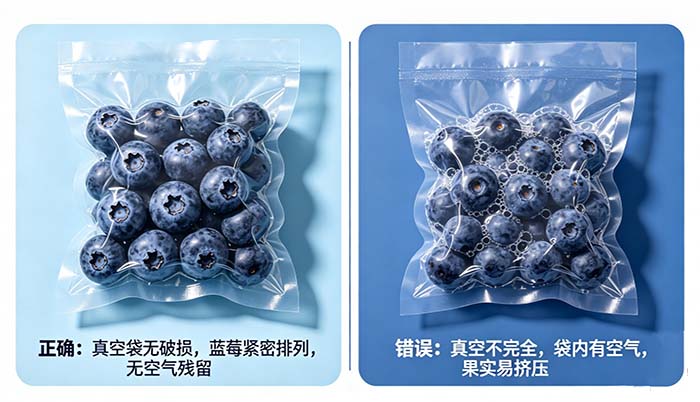
The optimal curve: Research indicates that a vacuum level of 70-90% lowers the partial pressure of oxygen sufficiently to slow respiration by 60-70%, without causing mechanical crush damage or anaerobic stress. For produce, you want modified atmosphere packaging (MAP) achieved through partial vacuum, not full vacuum.
Use this vacuum packaging machine parameters chart as your starting point. Always run a small batch test first.
| Produce Type | Vacuum Level | Seal Time | Special Requirements |
|---|---|---|---|
| Leafy Greens (Lettuce, Spinach, Kale) | 70-80% | 1.5 sec | Pre-cool to 4°C (39°F); add moisture absorber pad |
| Berries (Blueberries, Strawberries) | 85-90% | 1.2 sec | Rigid tray mandatory; high vacuum without tray causes crush |
| Root & Cut Vegetables (Carrots, Broccoli stems) | 95% | 1.8 sec | High vacuum allowed; no tray needed if dry |
| Cruciferous (Broccoli, Cauliflower florets) | 80% | 1.5 sec | Use gentle vacuum cycle to prevent floret crushing |
| Pome Fruit (Apples, Pears – sliced) | 98% | 2.0 sec | High vacuum + anti-browning agent (citric acid wash) |
Parameter settings alone won't save your produce. You must follow these three pre-treatment steps religiously.
If the core temperature of your produce is above 4°C (39°F) when it enters the bag, you will get condensation. Liquid water inside a sealed bag is the fastest path to mold and bacterial soft rot. Use a forced-air cooler or hydrocooler before vacuum sealing.
Chlorinated wash water reduces microbial load, but residual surface moisture is your enemy. Centrifugal dryers for leafy greens or forced-air drying tunnels for berries are essential. Wet produce in a vacuum bag becomes a fermentation pouch within 48 hours.
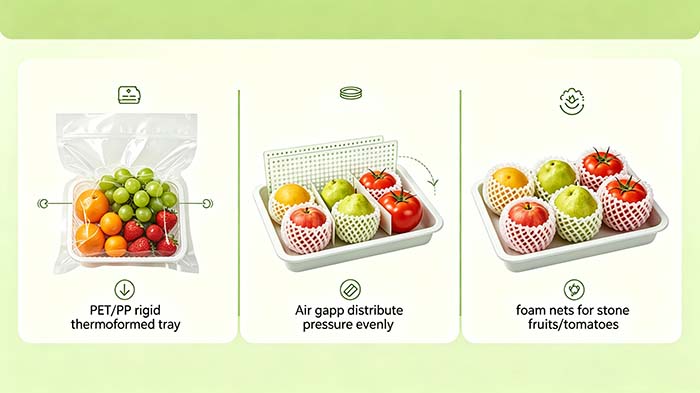
To prevent produce crushing, never place delicate items directly under the vacuum bag film. Use:
Rigid thermoformed trays (PET or PP) – the tray bears the vacuum force.
Perforated liners – creates air gaps that distribute pressure evenly.
Foam nets for stone fruits and tomatoes.
A common complaint from produce buyers is that vacuum-packed broccoli smells like sulfur or mushrooms taste like alcohol. This is anaerobic off-flavor caused by oxygen levels dropping below 0.5%.
The solution: Do not use impermeable standard vacuum bags for high-respiratory produce. Instead:
Use micro-perforated vacuum bags. These allow 2-5% residual O2 exchange.
Gas flush: If your machine has a gas flushing port, replace the removed air with a blend of 5% O2 + 85% N2 + 10% CO2. This maintains respiration without fermentation.
Not all vacuum sealers are suitable for produce. When selecting equipment, prioritize these features:
Adjustable vacuum level: Mandatory. Preset single-level machines will destroy your leafy greens.
Slow or "Gentle" mode: Increases pump-down time from 2 seconds to 10-15 seconds. This prevents "cell burst" caused by rapid pressure drop.
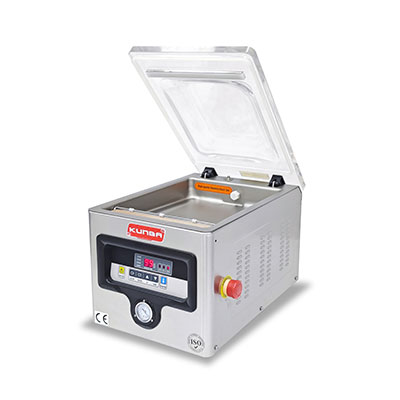
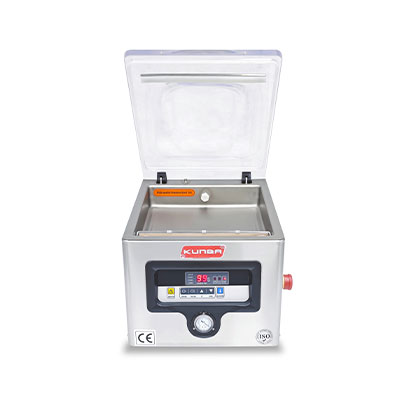
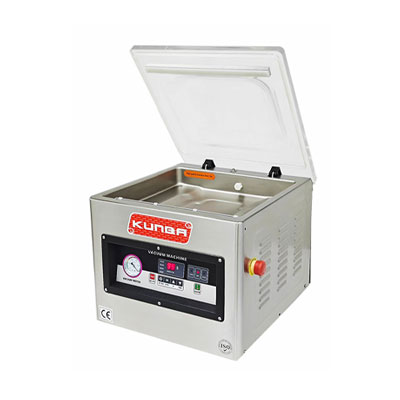
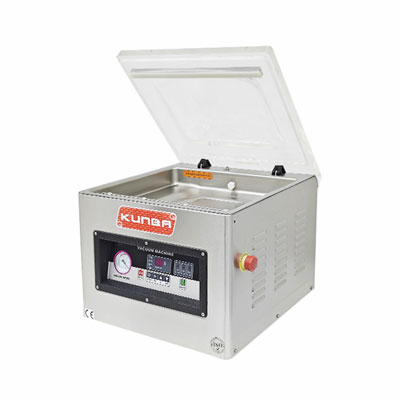
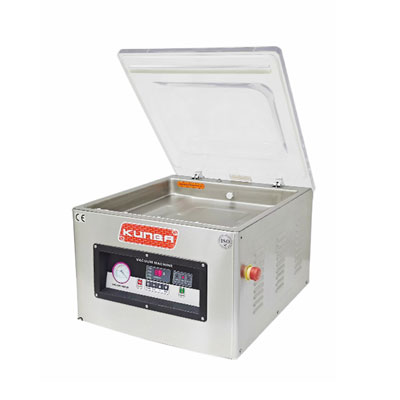
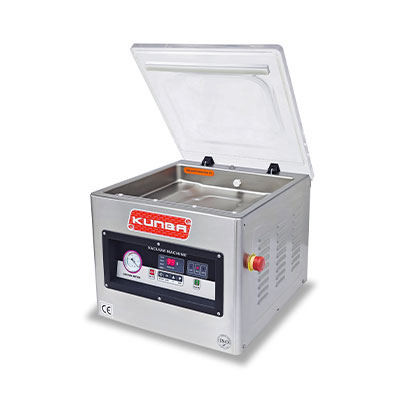
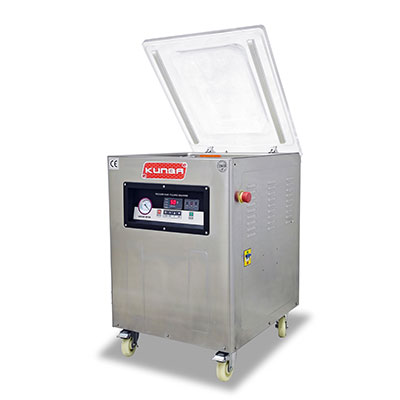
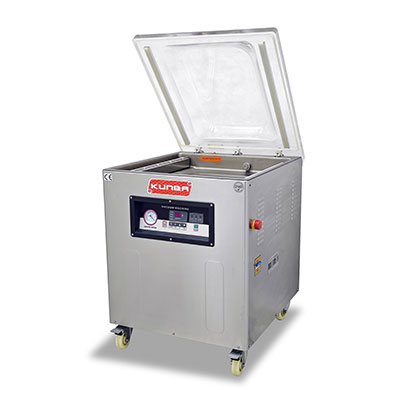
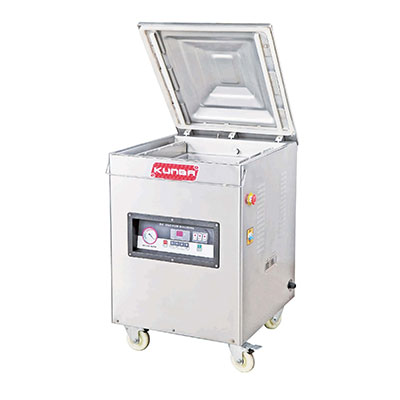
Programmable multi-stage cycles: Advanced machines like KUNBA models allow you to set: Vacuum to 80% → Pause 3 seconds → Vacuum to 90%. The pause lets gases redistribute and reduces mechanical stress.
Gas flush interface: Required for apples, broccoli, and prepared salads to achieve modified atmosphere.
Case study: Fresh-cut iceberg lettuce for burger toppings
Unpackaged: 2 days.
Standard high vacuum (98%) + standard bag: Crushed midribs and exudate within 12 hours; rejected by customer.
Optimized parameters: Fresh, crisp texture and no browning for 8 days under refrigeration.
Result: A 300% increase in usable shelf life, allowing regional distribution instead of local-only delivery.
Q1: Can I vacuum pack bananas?
No. Bananas are climacteric fruits that release large amounts of ethylene gas. In a sealed vacuum bag, ethylene accumulates and accelerates ripening into mush within 24 hours. Use perforated stretch film instead.
Q2: Do I need to use a special bag for produce?
Yes. Standard nylon/PE bags are too gas-impermeable. For leafy greens and broccoli, use micro-perforated vacuum bags. For berries and cut vegetables, standard bags are acceptable if vacuum level is reduced to 85%.
Q3: Why does my produce turn brown in vacuum?
Brown discoloration is enzymatic browning. It requires both oxygen and water. In high vacuum (98%+), you removed oxygen, but residual moisture activates the enzyme. Fix: Pre-treat with an ascorbic acid dip for 1 minute, then spin dry before vacuum sealing.
Vacuum packaging fresh produce is not about chasing the highest vacuum number. Success depends on matching the vacuum level to the product's physical structure and respiration rate: low-to-medium vacuum for delicate leaves and florets, high vacuum only for dense cut vegetables.
Always combine the right parameters with aggressive pre-cooling and mechanical protection.
For processors running multiple SKUs, invest in a machine with programmable multi-stage curves. KUNBA chamber vacuum sealers allow you to store up to 20 produce-specific programs—switch from spinach to carrots with one button press.
Next step: Download our Vacuum Parameters Quick Reference Card for produce types, or contact KUNBA for a sample testing kit to validate settings on your specific crop.

GET A QUOTE

 中文
中文 English
 Français
 Español
 Português