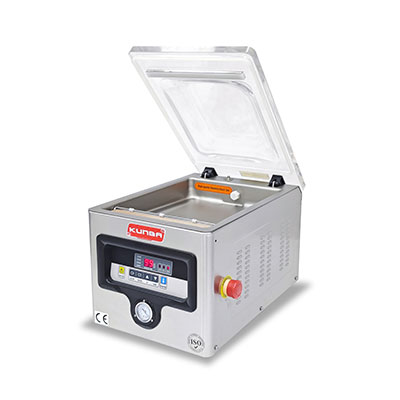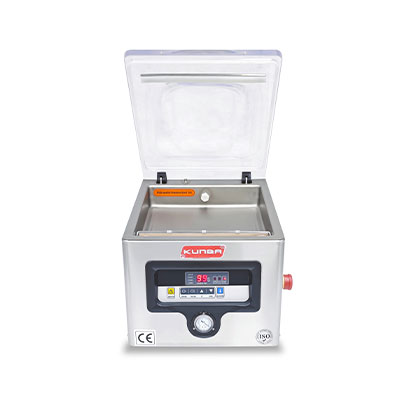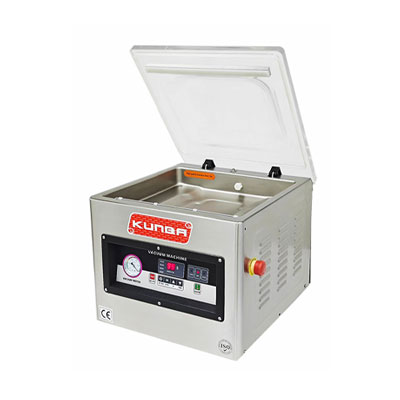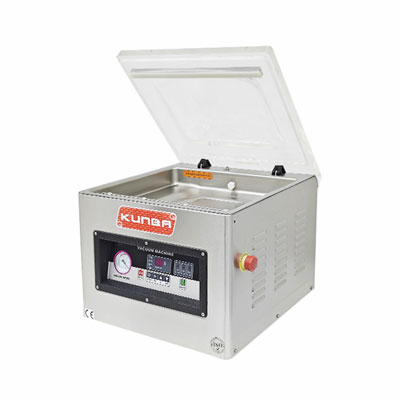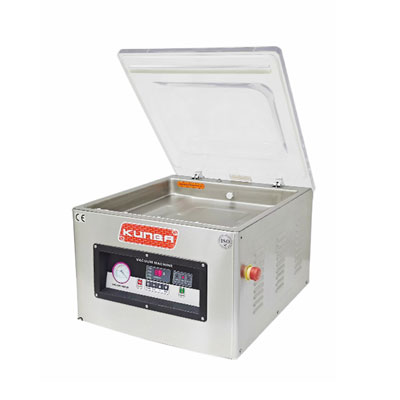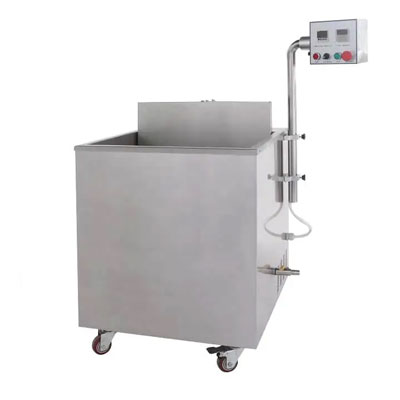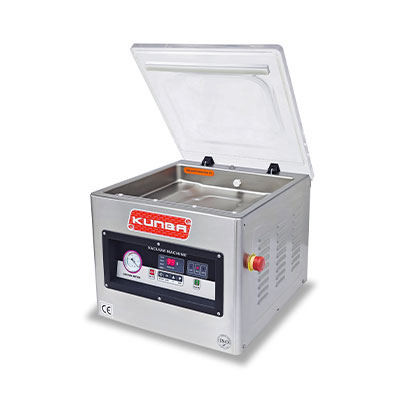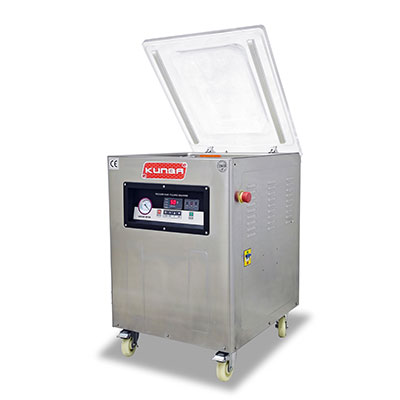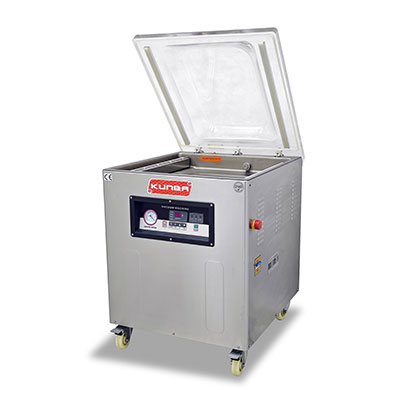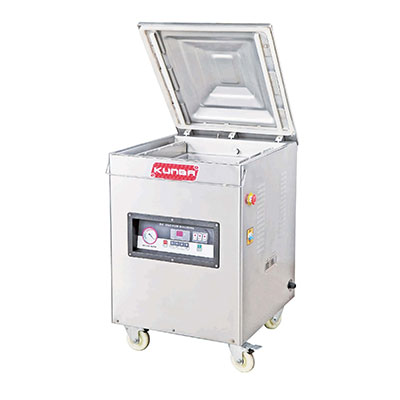
The vacuum pump is the heart of your vacuum packaging machine. Choose the wrong type, and you’re looking at frequent breakdowns, sky-high maintenance costs, and even product contamination risks that can ruin entire batches.
For plant maintenance supervisors and production managers, the choice often comes down to two technologies: the traditional oil rotary vane pump and the modern dry pump.
We will conduct an in-depth analysis of the operating principles behind both dry and oil-sealed pumps for vacuum packaging machines, compare their performance in real-world applications, and evaluate their total cost of ownership over their entire lifecycle. By the end of this article, you will be able to accurately determine which type of vacuum pump is best suited for your food production environment.
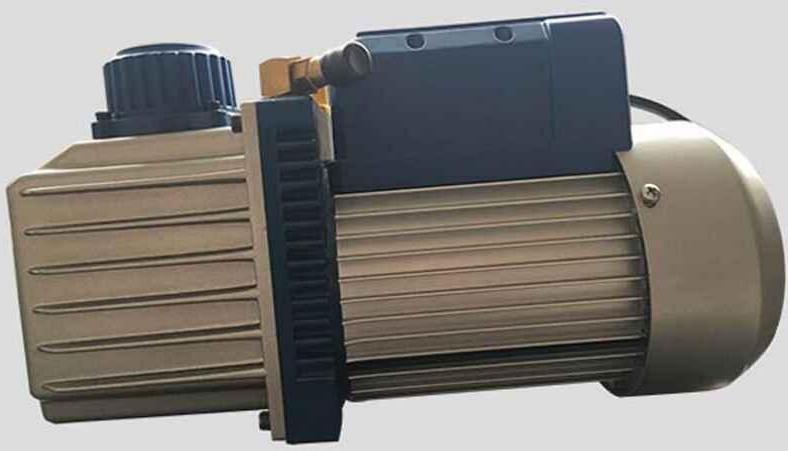
The oil rotary vane pump has been the industry standard for decades. Inside the pump housing, a rotor with sliding vanes spins inside a cylindrical chamber.
Sealing: Oil fills microscopic gaps between vanes and the housing, creating an airtight seal.
Lubrication: It reduces friction between moving parts.
Cooling: Oil absorbs heat generated during compression.
Ultimate vacuum level: Reaches as low as 0.5 mbar or less.
Proven reliability in diverse applications.
Requires regular oil changes (weekly checks, monthly changes).
Produces hazardous waste oil that must be disposed of properly.
Oil mist is exhausted into the environment unless a costly filter is installed.
Risk of oil backstreaming into the vacuum chamber and contaminating your product.
Dry pumps achieve vacuum without any operating fluid in the pumping chamber. Rotors spin in precise synchronization with micron-level clearances, never touching each other or the housing.
How it works: The pumped gas is compressed and moved through stages without oil or water. Bearings and gears are lubricated separately and sealed off from the pumping chamber.
Zero oil contamination risk – ideal for sensitive foods.
Low maintenance frequency – no oil changes.
HACCP compliant – eliminates oil as a contaminant hazard.
Clean exhaust – no oil mist in your production area.
Higher initial investment (typically 30–50% more than oil pumps).
Slightly lower ultimate vacuum (2–5 mbar vs oil's 0.5 mbar).
For most food packaging applications, extreme vacuum levels are overrated. Here’s how the two pump types actually compare in real production:
| Parameter | Oil Pump | Dry Pump |
|---|---|---|
| Ultimate vacuum level | 0.5 mbar | 2–5 mbar |
| Pump speed stability | Varies with oil temperature | Very stable |
| Suitable for juicy products | Yes (requires oil mist filter) | Yes (no contamination risk) |
| Sensitivity to powder/dust | Medium (oil traps particles) | High (requires inlet filter) |
Conclusion: For 99% of food applications, a vacuum level of 2–5 mbar is sufficient; the higher vacuum levels provided by oil pumps yield negligible marginal benefits in terms of extending shelf life.
Not every pump fits every production line. Use this checklist to match the pump type to your actual products and environment.
Oil pump? Possible, but requires an oil mist filter and strict maintenance to prevent oil backflow.
Dry pump? Preferred. No oil contamination risk, even if the pump stops under vacuum. Meets strict food safety standards.
Recommendation: Dry pump for any facility exporting to markets with strict hygiene audits (BRC, IFS, SQF).
Oil pump? More reliable. Oil traps fine particles, preventing them from circulating. Regular oil changes remove accumulated dust.
Dry pump? Requires an inlet particulate filter (adds cost and maintenance). Powder can adhere to rotors and reduce performance.
Recommendation: Oil pump with a properly sized oil mist filter. If using a dry pump, budget for pre-filters and more frequent cleaning.
Oil pump? Not recommended. Oil mist and potential backstreaming violate clean room protocols.
Dry pump? The only choice. Zero emissions, zero contamination risk.
Recommendation: Dry pump is mandatory for ISO Class 7 or cleaner environments.
Oil pump? Requires downtime for oil changes every 200–400 operating hours. You'll need backup pumps.
Dry pump? Strong advantage. No daily or weekly maintenance. Run continuously for 8,000+ hours between bearing grease changes.
Recommendation: Dry pump for any line running more than 16 hours/day.
The vacuum pump maintenance cost difference between dry and oil pumps is dramatic over a 5-year period.
Weekly: Check oil level and color. Top up or replace if dark/cloudy.
Monthly (200–300 hours): Complete oil change (0.5–2 liters depending on pump size).
Quarterly: Clean or replace exhaust oil mist filter.
Every 6 months: Inspect vanes for wear; replace if worn.
Annually: Overhaul including seals, bearings, and vane replacement.
Annual maintenance cost estimate (parts + labor): $800–1,500 per pump.
Weekly: None (visual check only).
Monthly: None.
Quarterly: Check shaft seals for any signs of leakage.
Annually: Replace inlet filter (if installed). Inspect rotor clearances.
Every 8,000–10,000 hours (~3–4 years): Replace bearing grease (sealed bearings may never need this).
Annual maintenance cost estimate: $100–300 per pump (mostly filter changes).
Bottom line: Over 5 years, an oil pump costs 3–5x more in maintenance than a dry pump. Factor in downtime for oil changes, and the total ownership gap widens further.
.jpg)
Yes, but with caveats. Most commercial vacuum packer pump types are interchangeable if the frame size matches. However, dry pumps require different electrical sizing (often higher starting torque) and may need different exhaust piping. KUNBA offers upgrade kits for our machine models. Always consult the manufacturer before retrofitting.
Generally, yes. A typical dry pump operates at 65–72 dB versus 70–78 dB for an oil pump of equivalent size. The difference is noticeable on a production floor. Dry pumps also lack the harsh "chattering" sound of vanes in an oil pump. However, neither type requires hearing protection at normal distances (below 85 dB).
Oil pumps are easier for your own maintenance team to repair. Vanes, seals, and oil filters are standard parts, and the technology is simple. Dry pumps require precision timing and specialized tools; rotor replacement or clearance adjustment is typically a factory-only job. If you have a well-equipped shop and trained technicians, stick with oil pumps. If you prefer minimal in-house work and longer intervals between service calls, choose dry.
The dry pump vs oil pump vacuum packaging machine decision comes down to two questions:
Choose the oil pump if:
Budget is limited (lower initial cost).
You can assign staff to weekly oil checks and monthly changes.
You're packaging dry products like grains, nuts, or coffee.
You have an in-house maintenance team comfortable with vane replacements.
Choose the dry pump if:
You prioritize food safety and want to eliminate oil contamination risk.
Your production runs 16+ hours per day or 7 days per week.
You want to reduce maintenance labor and hazardous waste disposal.
You are in a clean room, pharmaceutical, or high-hygiene food environment.
The oil-free vacuum pump for food is a customer or auditor requirement.
Both pump types have their place. But for growing operations that value uptime and hygiene, the dry pump's total cost of ownership is increasingly attractive.
Still unsure which commercial vacuum packer pump type fits your line? Contact KUNBA for a personalized pump selection recommendation. We manufacture both oil pump and dry pump configurations across our machine range – so you get an unbiased answer and exactly the right equipment for your production reality.

GET A QUOTE

 中文
中文 English
 Français
 Español
 Português